Mouth width in inches
Horse Bit Sizing: Bit Size Chart and How to Measure for a Bit
Measure lip to lip, add room for the bit style, then match the number to the bit size chart.
A bit size is the length between the inside of the rings, in inches. Measure your horse's mouth from lip to lip, round up if you land between sizes, and add 1/8 to 1/4 inch for loose rings.
How to measure a horse for a bit, step by step
To measure a horse for a bit, mark the width of the mouth in inches and match that number to a bit size. A bit measure does this in one step, or you can use a string or a stick; the steps below work with any of the three.
- Hold a bit measure, or a string or stick, across the horse's mouth, resting it where a bit would sit.
- Mark the spot where it meets the lip on one side, then mark the other side.
- Measure between the two marks in inches. That number is the starting size.
- Round up when you land between sizes. Fixed cheeks (eggbutt, D, full cheek) sit against the lips, so they use the number as measured. Loose rings need an extra 1/8 to 1/4 inch.
- Add 1/4 to 1/2 inch for a curved or very thick mouthpiece, then check the fit in the mouth: aim for about two wrinkles at the lips.
Bit size chart: inches and centimeters by brand
Bit size is the length from the inside of one ring to the inside of the other, in inches, so a bit size chart converts that number to centimeters. The first chart below runs 3 to 6 inches (7.5 to 15cm). The second prints metric sizes from 95 to 165 against 3.75 to 6.5 inches, so you can read your mouth measurement in either unit.
| INCHES | 3" | 3.5" | 4" | 4.25" | 4.5" | 4.75" | 5" | 5.25" | 5.5" | 5.75" | 6" |
|---|---|---|---|---|---|---|---|---|---|---|---|
| CENTIMETRES | 7.5cm | 9cm | 10cm | 10.5cm | 11.5cm | 12cm | 12.5cm | 13cm | 14cm | 14.5cm | 15cm |
| Size | (A) |
|---|---|
| 95 | 3.75" |
| 105 | 4" |
| 115 | 4.5" |
| 125 | 5" |
| 135 | 5.25" |
| 145 | 5.75" |
| 155 | 6" |
| 165 | 6.5" |
- When measuring the bit size, always measure the length from the inside of one bit ring (or cheekpiece) to the inside of the opposite one. Make sure the bit is straightened. The thickness of the bit is always measured just inside the bit ring. When placed in the horse's mouth, there should be max. 5mm (1/4") play on either side of the bit.
Bit too small or too large: pinching versus sliding
A bit is too small when the rings pinch the lips and you see fewer than two wrinkles, and too large when it slides side to side with more than 1/2 inch showing on each side. The size chart's own note sets a tighter target of 1/4 inch of play at most on either side.
The horse size Myler tend to run large. By about half an inch.
Shires Slotted Cheek Port Mouth Kimberwick Bit
I ordered this 5.5” bit and it’s a half inch too big so I need to order the 5” version.
Sizing by bit type: snaffles, pelhams and kimberwicks
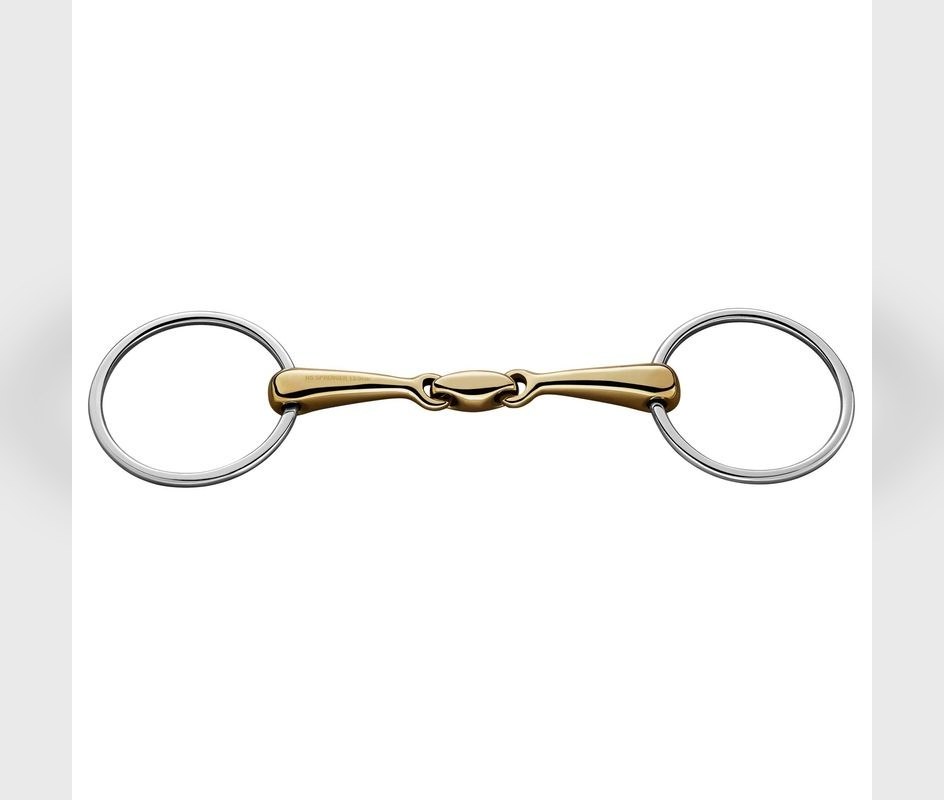
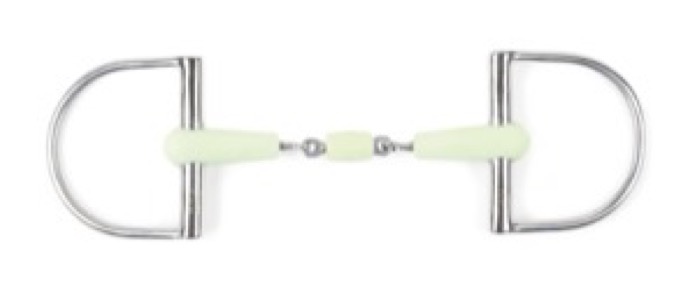
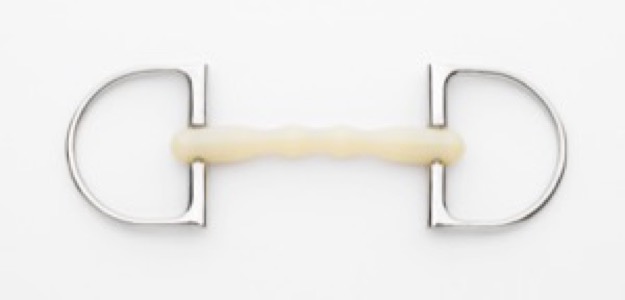
Bit type changes the size you need because the cheekpiece decides how the rings sit against the lips. Eggbutt, D and full-cheek bits, such as the Shires Equikind Hunter Dee and the Centaur Jointed Barrel Dee, rest against the lips, so use your measurement as is. A loose ring, such as the Herm Sprenger Loose Ring Snaffle, needs an extra 1/8 to 1/4 inch.
Bit size ranges by brand, from pony to full-size horse
Bit size ranges differ by maker, and the table below lists the size run of the carried styles. Shires runs 4 to 6 inches with quarter steps from 5 to 5.5 and half-inch steps otherwise, Centaur runs 3.5 to 5.5 inches with half-inch steps to 4.5 and quarter steps after that, and Myler runs 5 to 6 inches.
| Line | Style | Sizes offered | Step pattern |
|---|---|---|---|
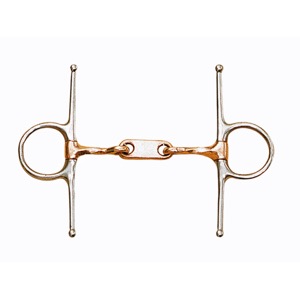
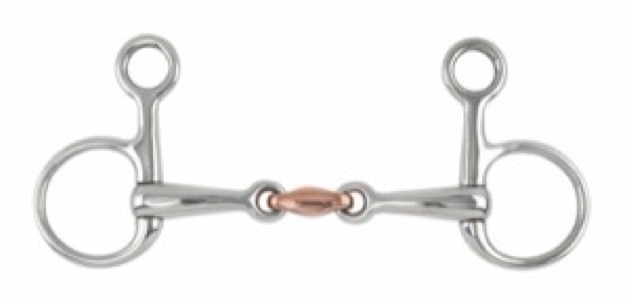
| Shires | Hanging Cheek Baucher Copper Lozenge Snaffle | 4.5, 5, 5.25, 5.5, 6 in | Quarter steps from 5 to 5.5, otherwise half inch |
| Shires | Equikind Hunter Dee with Lozenge | 4, 4.5, 5, 5.25, 5.5, 6 in | Quarter steps from 5 to 5.5, otherwise half inch |
| Centaur | Jointed Barrel Dee | 3.5, 4, 4.5, 4.75, 5, 5.25, 5.5 in | Half-inch steps from 3.5 to 4.5, then quarter steps to 5.5. |
| Myler | Loose Ring Mullen Forward Tilt Low Port MB 36 | 5, 5.25, 5.5, 6 in | Quarter steps from 5 to 5.5, then half inch |
| Myler | Loose Ring 14mm Comfort Snaffle Wide Barrel MB 02 | 5, 5.5, 6 in | Half inch steps |
| Happy Mouth | Jointed Baucher | ||
| Herm Sprenger | KK Ultra Bradoon 12mm | 95, 105, 115, 125, 135, 145 mm | Ten millimeter steps |
| Horze | Oval Link Loose Ring Snaffle | 95, 105, 115, 125, 135 mm | Ten millimeter steps |
What riders say about finding a bit that fits
Shires Hanging Cheek Baucher Copper Lozenge Snaffle Bit
My mare is VERY picky about what bits she likes. I've gone through many a bits in my budget, but none worked for her...until I tried this one on her. She LOVES it. For the price, it is a fantastic bit.
Myler Eggbutt no Hooks Wide Ported Barrel Bit MB 33WL
The perfect solution for my hunter mare who hates tongue pressure, and responds well to bar pressure. A beautifully built bit, and a great alternative to riding her in a kimberwick.
I fox hunt in this bit and use it for eventing activities. It's my go-to for safe riding on days when my spooky and reactive mare is up and in the winter when she tends to be very wild.
He has always fought and showed discomfort with every bit I've tried until the Myler Eggbutt Snaffle Bit. It has made all the difference. I think each side having independent movement has been key.
Shop bits in every size
Shop Bits
Shop all ›Measure first, then filter the bits by size. Open any bit to see its sizes and check the measurement against your horse's mouth width. Snaffles, pelhams and gags are all here.
Horse Bit Sizing FAQ
What size bit does my horse need?
Measure your horse's mouth width in inches, then match it to a bit size. Fixed-cheek bits (eggbutt, D, full cheek) use that number as measured, and loose rings need an extra 1/8 to 1/4 inch. Round up when you land between sizes. Check the size chart above, then shop bits by size.
CloseHow do I measure a horse for a bit?
Use a bit measure, a string or a stick. Mark where it meets the lip on each side, then measure between the marks in inches. Add 1/4 to 1/2 inch for a curved or very thick mouthpiece. Aim for about two wrinkles at the lips, then compare your number with the size chart.
CloseHow do I know if a bit is too big or too small?
A bit is too small when it pinches and leaves fewer than two wrinkles at the lips. It is too big when it slides and more than 1/2 inch shows on each side. The size chart's own note allows 1/4 inch of play per side. Measure again before you reorder.
CloseDo loose ring bits need a bigger size than eggbutt bits?
Yes, loose ring bits need an extra 1/8 to 1/4 inch because the rings move on the mouthpiece. Fixed-cheek bits such as eggbutt, D and full cheek rest against the lips, so use the measured size. Match the number to the cheekpiece style, then pick your size.
CloseWhat if my horse is between bit sizes?
Round up to the next size. If more than 1/2 inch shows on each side in the mouth, drop back a size and compare the size chart and the size ranges above. A curved or thick mouthpiece adds 1/4 to 1/2 inch. Start from the measurement, then confirm the fit.
Close