
Getting Ready to Compete
Every discipline has its own rules about what you can and can't wear. Here's what's expected, discipline by discipline — so you buy once and compete confident.
Start with the Rules →Know the Rules Before You Buy
Competition attire isn't about taste — it's about a rulebook. What passes in a hunter ring is wrong in a dressage test, and what's required cross-country isn't what you wear in stadium. Start here, then go to your discipline.
Rules change season to season and vary by association — USEF (hunter, jumper, dressage), USEA (eventing) and AERC (endurance) each publish their own. Throughout this guide we've marked which claims are actual rules and which are convention: a Rule tag cites the governing rule, a Convention tag means the rulebook is silent and this is simply what the ring expects, and a Safety tag means no rule requires it but you should treat it as though one did. Local and schooling shows are usually more relaxed than rated competition, and the same goes for unrated rides. The prize list or ride entry for the competition you're actually entering overrides everything below.
Hunter / Jumper
The hunter ring rewards a quiet, classic picture. Nothing should draw the judge's eye away from the horse. Conservative colors, clean lines, correct fit.
Competition Jacket
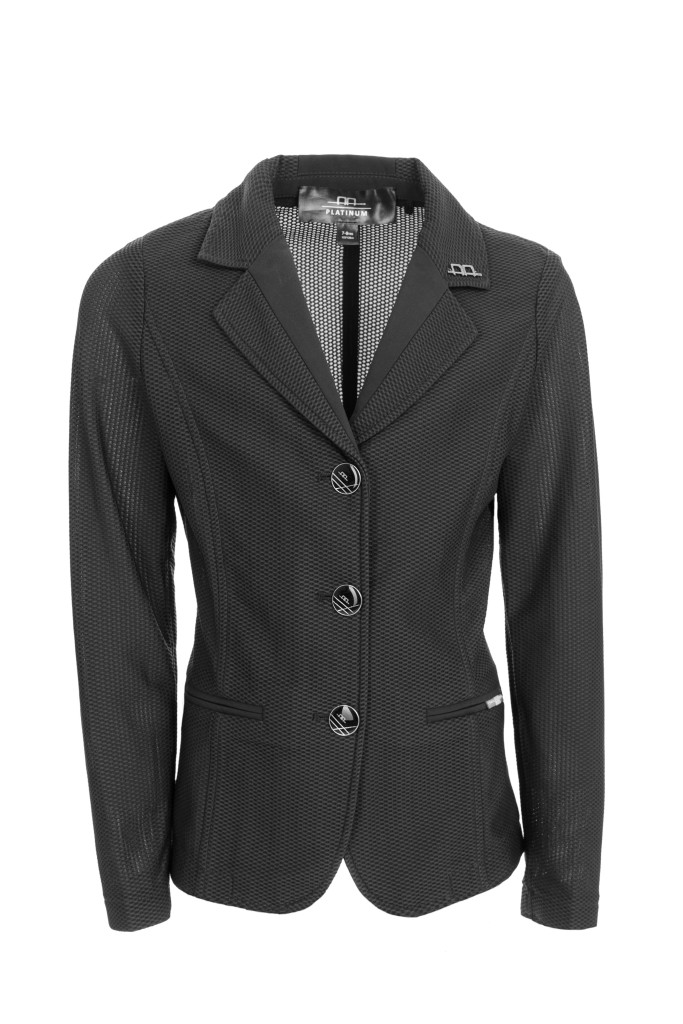
ConventionConservative, dark colors — navy, black, hunter green or dark grey. USEF JP111.8Jumpers split by class: formal classes want dark, muted or scarlet, proper classes allow any color, and standard classes do not require a coat at all. ConventionThey read as the classic wool coat from the rail, but they're anything but — lightweight stretch mesh that moves with you instead of gaping or pulling.
Competition Shirt
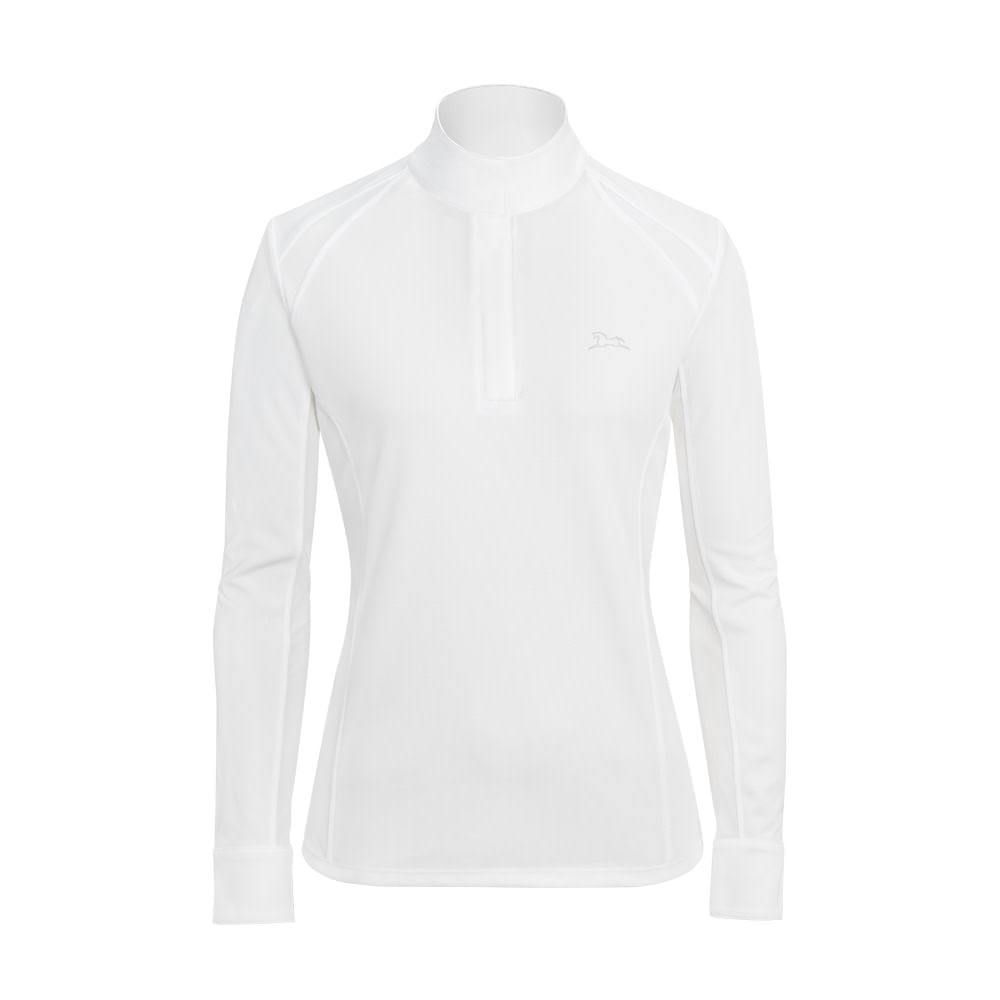
USEF EQ106.2In equitation, a shirt must have “a choker, similar collar or tie” — neckwear is required, not optional. ConventionCollar and cuffs are generally white. The body of the shirt — colored, striped or plain — is hidden the moment the jacket goes on, so that is where the pattern lives. Technical wicking fabrics are the standard now.
Breeches
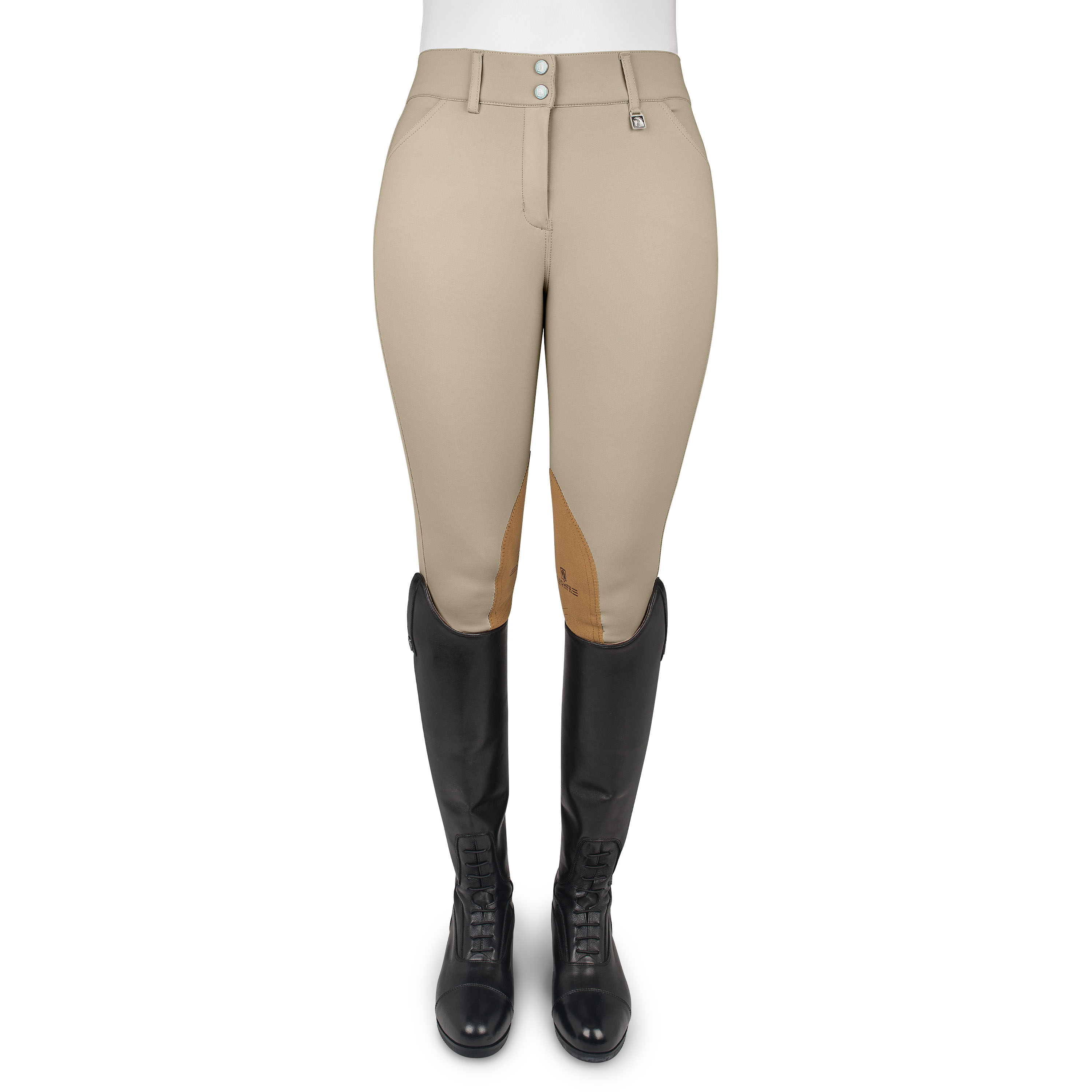
USEF EQ106.2The equitation rule does specify colors: “buff, canary, tan, rust or white.” Jumpers, per JP111.8, want white or fawn in formal classes and allow any color in standard ones. ConventionIn practice the ring is tan, beige or white — canary is still in the rulebook but nobody wears it. Knee patch is the hunter norm; full seat is more common in the jumper ring. Which color you buy follows the level you’re competing at, not preference.
Tall Boots
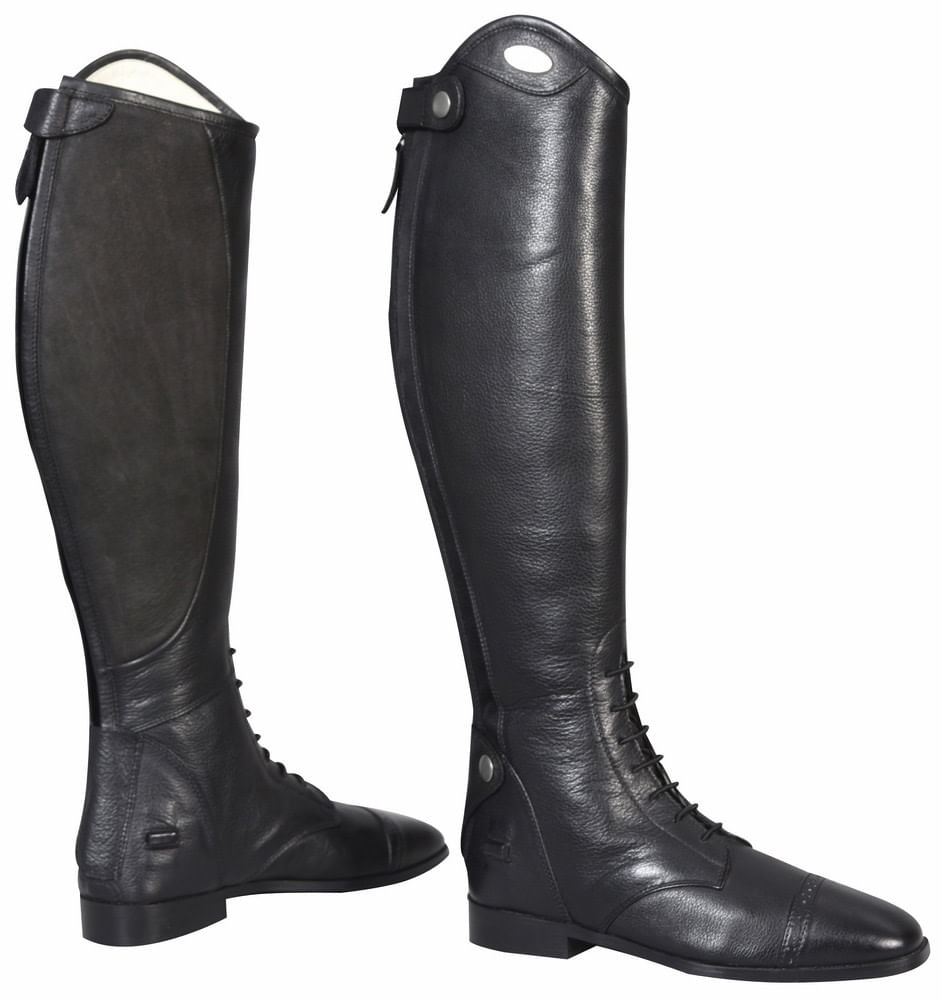
ConventionBlack field or dress boots — field boots, laced at the ankle, are the hunter standard, though no rule names the style. Full chaps are not permitted outside unjudged warm-up. These are off-the-shelf, so when you order, check that the calf measurement and the boot height genuinely work for you. Tip: tall boots drop in height as they break in, so they need to sit right under your kneecap to start with.
Helmet
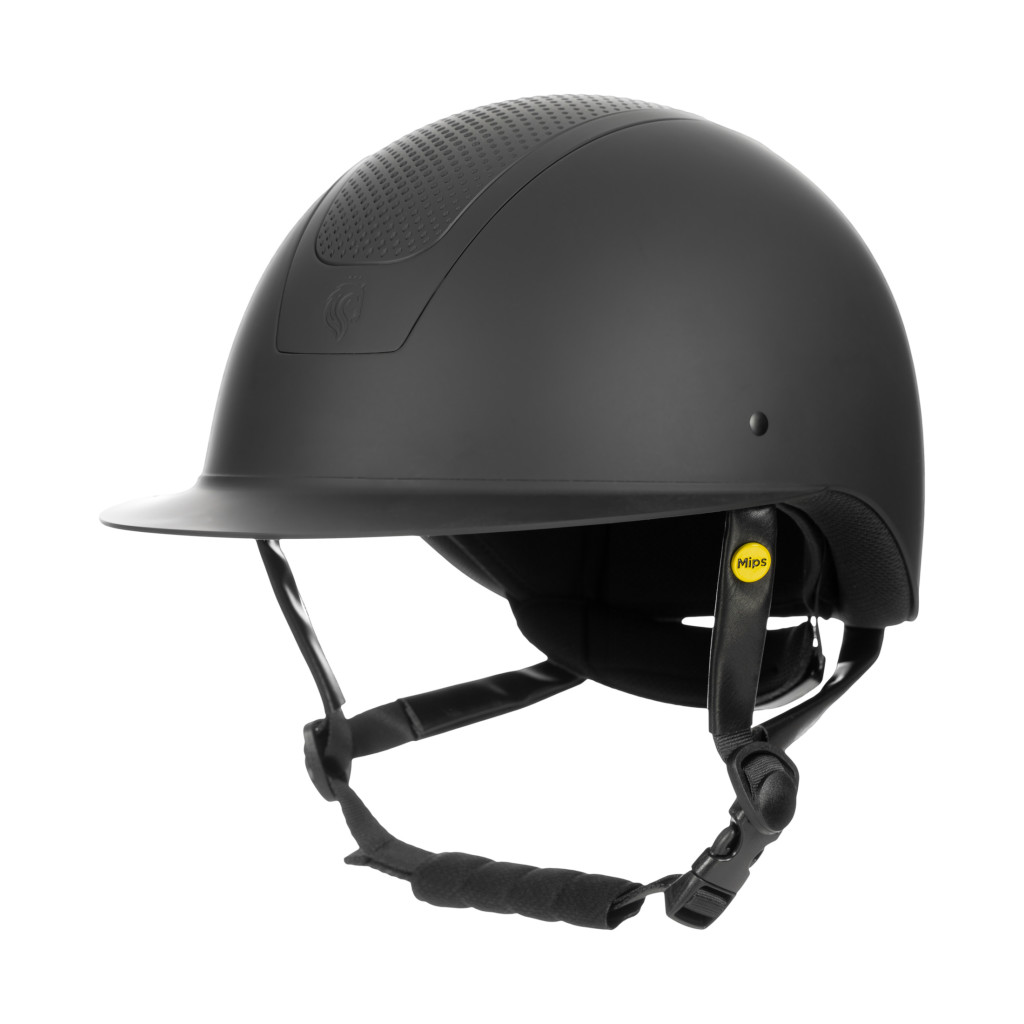
USEF GR801Certified headgear, harness secured, for anyone mounted anywhere on the competition grounds — not just in the ring. USEF accepts ASTM F1163/SEI, PAS 015, VG1 01.040 and Snell 2016.
Gloves
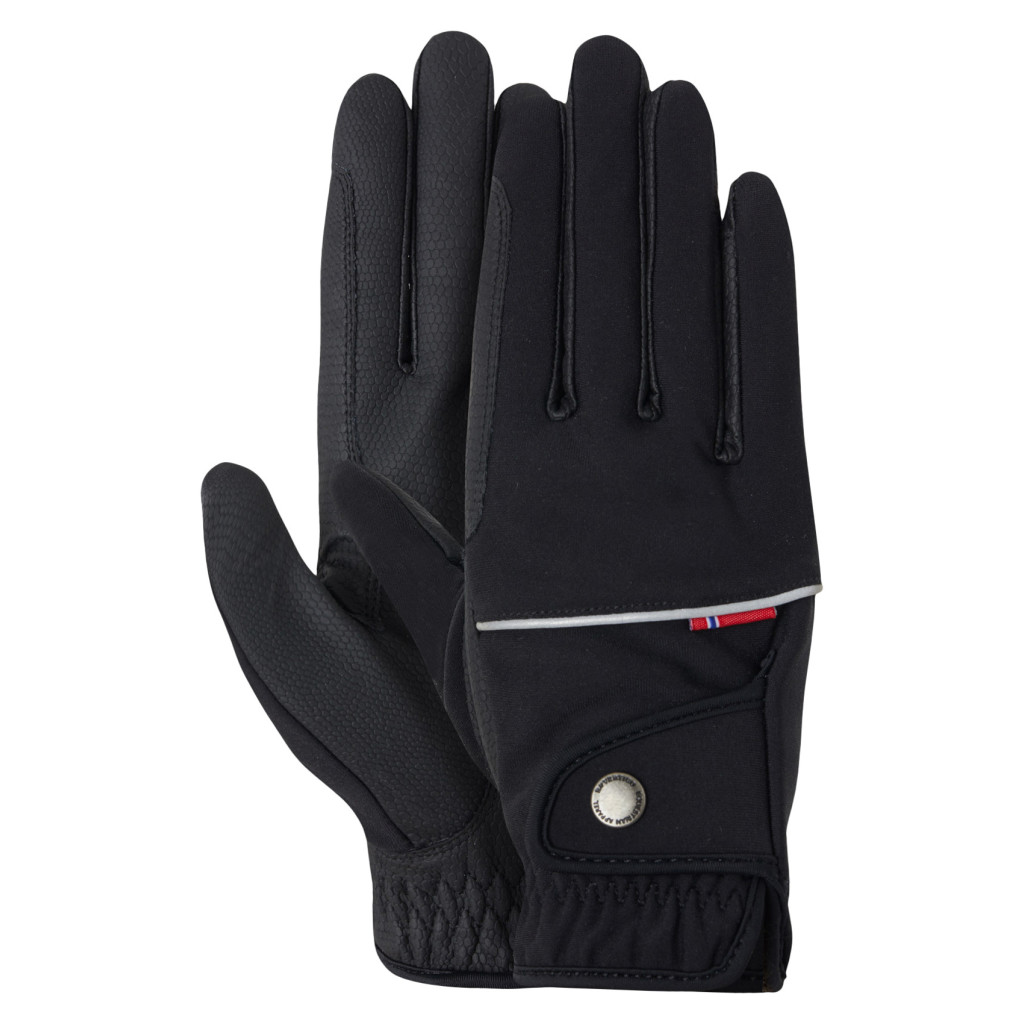
ConventionTan, white or a neutral — black is fine too. Optional in most hunter classes, expected in the equitation ring, and they save your hands either way.
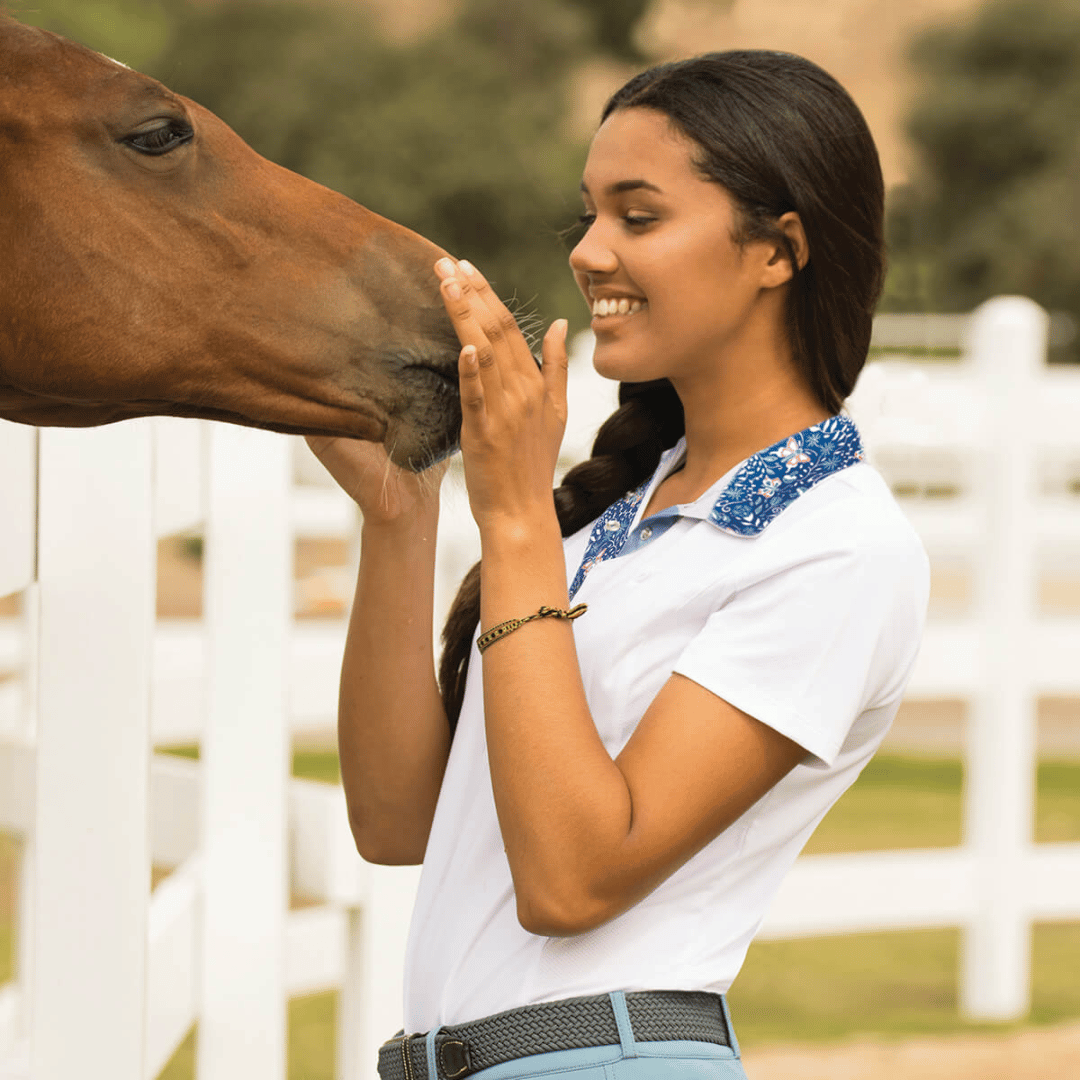
ConventionA competition shirt from a premium brand does the thinking for you. Labels like RJ Classics design to observe not only the rules but the current conventions — so you get the collar, cut and colorway the ring actually expects, rather than something merely legal.
ConventionNothing above changes for men — same colors, same coat, same boots. The cut differs, that's all. Men's competition jackets at TOD and men's tall boots.
Dressage
Dressage attire is the most level-dependent of any discipline. What's correct at Training is not what's correct at Fourth — and buying ahead of your level is how good money gets wasted.
Competition Jacket
USEF DR120.1.2Any single-color jacket or tailcoat, and subtle pin striping, checks or tweeds are allowed. A tailcoat is permitted above Fourth Level and in certain FEI tests; a shadbelly is permitted at any level. Black and navy are convention, not rule.
Competition Shirt & Neckwear
USEF DR120.1.5Riding in a jacket, you need a shirt plus a tie, choker, stock tie or an integrated stand-up collar — your choice, and any color is permitted. If the jacket is waived, the shirt can be any color but must have sleeves and a collar, and separate removable neckwear is then prohibited. The rulebook says nothing at all about pins. ConventionIn practice the body of the shirt is hidden under the jacket anyway, which is why collars and cuffs are so often white.
Breeches
USEF DR120.1.4White, light or dark are all permitted — white is convention, not a requirement. Bright colors and patterns are not allowed. Full seat is the norm; you want the grip for sitting work.

Tall Boots
USEF DR120.1.6At Fourth Level and below you may ride in tall boots or paddock boots with half chaps. Above Fourth, tall boots are required — and the rule explicitly allows dress or field boots. ConventionIn practice the ring is all dress boots: plain front, no laces, with stiffened back seams at the advanced end to hold the leg quiet.
Helmet
USEF DR120.1.1Certified protective headgear, carrying its testing tag, for all riding on the competition grounds. DR120 lists no top-hat allowance at national levels — if you are riding FEI, check the current FEI rule rather than assuming either way.

Gloves
USEF DR120.1.7White or light gloves are recommended, and any solid color is permitted at Fourth Level and below. Required in FEI tests, in white, off-white or your coat color. Bring a spare pair — they show every mark.
Buy for the level you're riding now, not the one you're aiming at. The rule permits far more than the ring actually wears, so a plain dark coat, white shirt with a stock tie and white breeches is the safe default at any national level — not because it's required, but because nobody will look twice at it. The tailcoat can wait until you're above Fourth and know what fits you.
Eventing — All Three Phases
Eventing is the only discipline that asks you to change clothes twice in a weekend. Each phase has its own rules, and cross-country has the strictest safety requirements in the sport.
Dressage Phase
USEF EV114.5A coat is not required from Beginner Novice through Modified — a collared shirt in a conservative color, neatly tucked, is enough. From Preliminary up a coat is required, dark or tweed, with tweed prohibited at Intermediate and Advanced and tail coats permitted only there. Gloves are optional through Preliminary in dark, tan, beige or white, and required at Intermediate and Advanced in white or dark.
Cross-Country Phase
The safety phase. This is where the rulebook stops being about appearance.
- USEF/USEABody protector / safety vest — mandatory. Must meet or surpass ASTM F1937, or UK BETA Level 3 (2009).
- USEF GR801Helmet — certified, properly fitted, harness secured. What counts is the certification, not the price tier: there's no such thing as a helmet that's legal to school in but not to run cross-country in. Skull caps are the popular cross-country choice — British Eventing has banned fixed peaks on cross-country since 2015, on the reasoning that a rigid peak can act as a lever on the neck or a pressure point in a fall.
- USEF EV114.6Cross-country top & colors — a shirt of any color with sleeves is required. Breeches, jodhpurs and gloves may be any color. ConventionLycra or stretch technical fabric, coordinated with your hat silk.
- USEF EV114.6Boots — black or brown, field or jodhpur, or a black or brown full-grain smooth leather leg piece with matching boots. Chaps and half chaps are prohibited on cross-country — do not plan around them for this phase.
- USEF/USEAAir vest — permitted only when worn over a body protecting vest. Never instead of one.
Stadium Jumping Phase
USEF EV114.7Less prescriptive than it looks, and cross-country colors do not carry over into this phase.
- Jacket — optional at most levels, and required at Intermediate and Advanced (EV114.5.c). If you wear one, any single-color jacket is allowed, tweeds and pinstripes included. It does not have to be a hunt coat.
- No jacket, lower levels — from Beginner Novice through Modified you may compete without one, in a collared shirt of any color or design, long or short sleeved, without neckwear. Discreet collar, cuff or piping accents are fine.
- Breeches — light color or white. Boots — black, brown or another dark hue.
- FEI Art. 256Internationally: breeches white or light fawn, shirt collar white with white cuffs on long sleeves, boots black or brown with a heel, and protective headgear with a three-point harness compulsory whenever mounted. Jackets may be waived for heat, in which case shirts must still have sleeves.
Certification standards are revised periodically, and a protector that met the standard a few seasons ago may not meet the current one. Check the label against the standard named in the current rulebook before entry — not the morning of. If you can't read the label, assume it needs replacing.
Endurance & Distance Riding
No coat, no stock tie, no judge scoring your turnout. What matters over fifty miles is what doesn't chafe, what breathes, and what you can still stand at hour six.
Helmet
USEF EN110.1Compulsory. Protective headgear of a recognized equestrian/endurance standard, adequately secured, for all persons while mounted at USEF endurance events — there is no age exception. It must pass ASTM/SEI and carry the SEI tag (EN110.1.1). AERC's own rulebook only mandates helmets for riders under 18, so an unrated ride may not check — but at rated competition it is required of everyone. Choose for function: ventilation and weight matter more than looks when you're in it all day.

Riding Top
ConventionMoisture-wicking and UV-protective. Technical fabrics earn their price on a long ride — cotton does not.

Tights or Breeches
USEF EN110.3No color is specified by either body. USEF asks only for dress "appropriate and not detrimental to the image of Endurance Riding"; AERC sets no dress code at all. So color is your call — pick for the heat and the miles. Full-seat grip, flat seams; seam placement is the whole game over distance.

Footwear
USEF EN110.2Safe riding footwear with a heel of 12 mm (½ inch) or more — or caged / safety stirrups instead — is required to compete in a CEI event. The reason holds whatever the rulebook says: it is what stops your foot sliding through the stirrup in a fall. ConventionPaddock boots with half chaps are the popular choice — cooler than tall boots and easier at the vet checks — but tall boots are equally correct.
Gloves
ConventionHand protection first — preferably breathable and washable. Endurance and long-distance riding is hard on gloves, so choose a premium brand that can take that kind of wear.
Competition Attire by Discipline
Every discipline side by side. Find your row, then shop whatever you're still missing — it's all below.
| Discipline | Coat | Shirt | Breeches | Boots | Gloves | Other |
|---|---|---|---|---|---|---|
| Hunter | Navy, black or hunter green hunt coat | White or cream, collared | Tan or beige | Black field boots | Tan or neutral | Conservative throughout — quiet is the point |
| Jumper | Navy or black; more color allowed | White or pale | White or tan | Black field or dress | Optional | Coat often waived in heat |
| Dressage | Any single color; tailcoat above 4th | Neckwear required with jacket — any color | White, light or dark — no brights | Tall boots; dress boot is convention | White or light; any solid to 4th | Certified helmet at every level — no top hats |
| Eventing — Dressage | None to Modified; dark or tweed Prelim+ | Collared, conservative | White | Black tall boots | Expected | Certified helmet at all levels |
| Eventing — XC | None — XC colors | Any color, sleeves required | Any color | Black/brown field or jodhpur — no half chaps | Recommended | Body protector REQUIRED; helmet with non-removable chinstrap |
| Eventing — Stadium | Optional to Modified; required Intermediate+; any single color | Collared, any color | Light or white | Black, brown or dark | Optional | XC colors do not carry over — USEF EV114.7 |
| Endurance | None | Wicking technical top | Tights or full-seat — any color | Heel 12 mm+ or caged stirrups (CEI) | Recommended | Certified helmet compulsory for all — USEF EN110.1 |
Rules vary by association and change season to season. Always confirm against the current rulebook and the prize list or ride entry for the competition you're entering.
Shop by Category
Everything the guide covers, by category.


Scroll for more →
Competition Apparel Checklist
Before you load the trailer.
The Brands We Carry
The labels riders reach for when it counts.




Scroll for more →
Women, Men & Kids
The same competition categories, filtered to the department you're shopping.
Women's
Competition apparel, footwear and gloves in women's sizing.
Men's
Competition apparel, footwear and gloves in men's sizing.
Kids'
Competition apparel, footwear and gloves in children's sizing.
The Universal Rule
A jacket that fits and moves with you beats an expensive one that doesn’t. Judges are scoring horsemanship, not your receipts. Get the fit right, make sure you have full freedom of movement through the shoulder and arm, keep it clean, and check that the safety gear is current. The rest is preference.
Ready to Gear Up?
Competition apparel, footwear and rider gear — new deals every day.