FAST
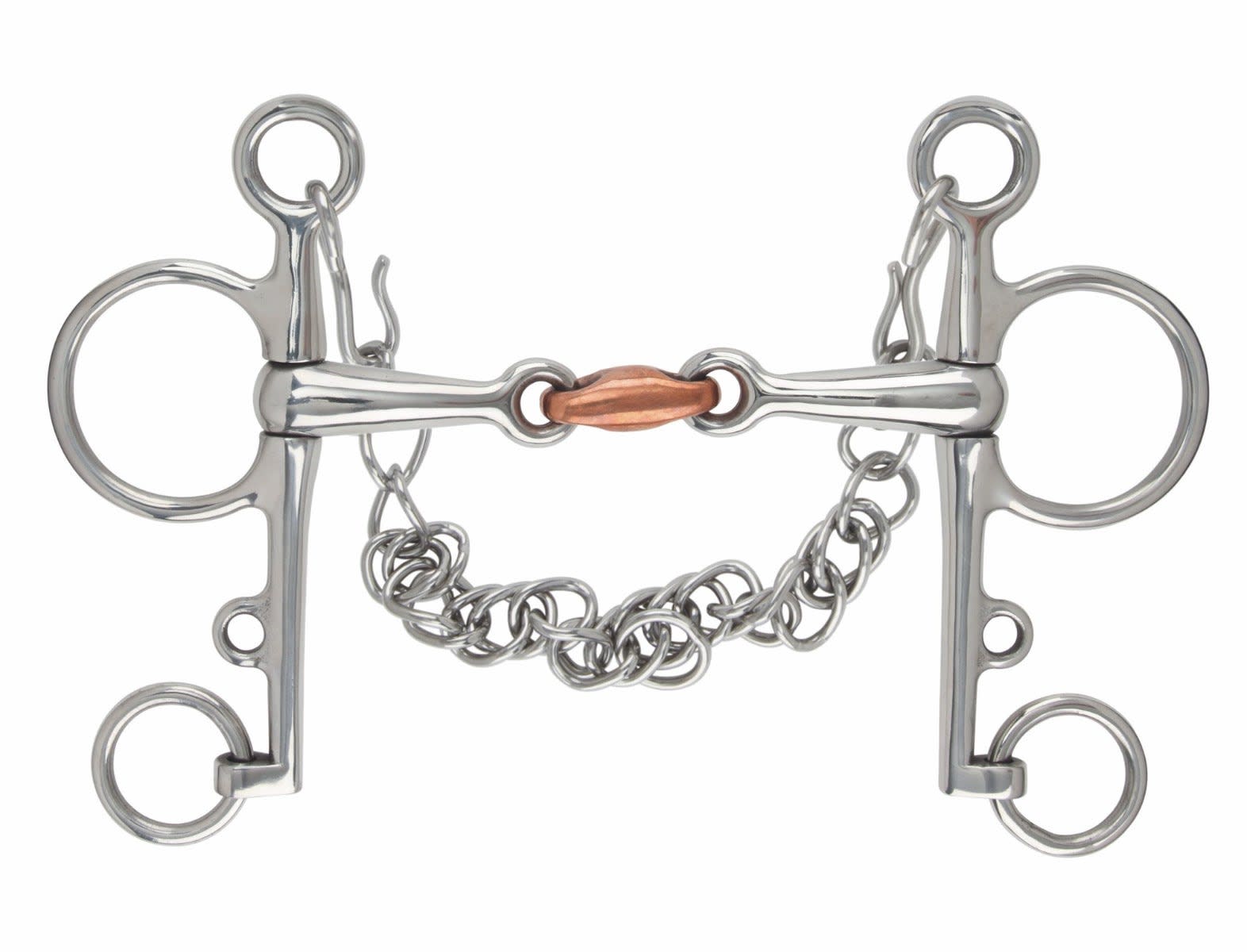
Korsteel Stainless Steel Jointed Pelham Bit
$53.99
Curb-chain control, your mouthpiece
Pelhams and kimberwicks add curb-chain action to a mouthpiece you choose: jointed, mullen, ported or rubber. Compare cheek length, mouthpiece thickness and metal across Centaur, Herm Sprenger, Shires, Myler and more.
Updated November 2026
Shop pelham & kimberwick bits by brand
Find Your Fit
In the Spotlight
Centaur Tom Thumb pelhams, with 4-inch cheeks in 18/8 stainless steel
Centaur pelhams and kimberwicks
Jointed and rubber Tom Thumb pelhams
The Pelham & Kimberwick Edit
Pelhams and kimberwicks share a curb chain but ride differently. The six sections below cover one rein versus two, Tom Thumb and mullen mouthpieces, premium makers, kimberwicks and sizing.
Two reins or one
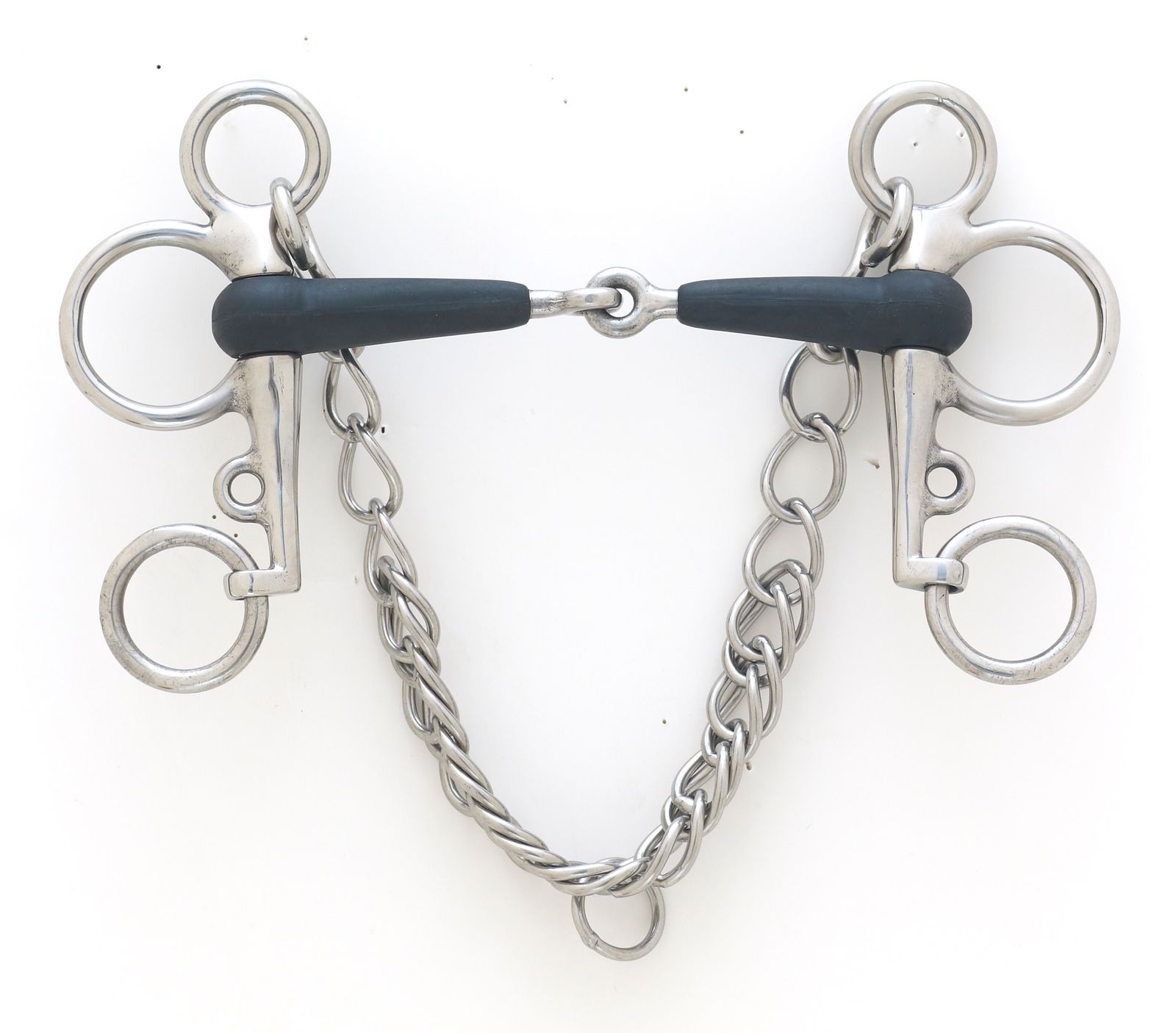
A pelham suits the rider who wants separate snaffle and curb reins, and a kimberwick suits the rider who wants one rein and a simpler setup. The Centaur Jointed Tom Thumb Pelham shows the pelham pattern: a single-jointed mouthpiece, 4-inch cheeks and a curb action, in 18/8 stainless steel. Horze describes its pelhams as made for two reins or a bit converter, with snaffle and curb action together.
A kimberwick has slots in the cheek so one rein can sit in more than one position. Shires lists a Slotted Cheek Port Mouth Kimberwick with 100mm cheeks and a 14mm mouth, and Centaur lists both styles. Look elsewhere if you want a plain snaffle with no curb chain at all, since every bit on this page works with one.
Browse both styles from Centaur and Shires.
Short cheeks
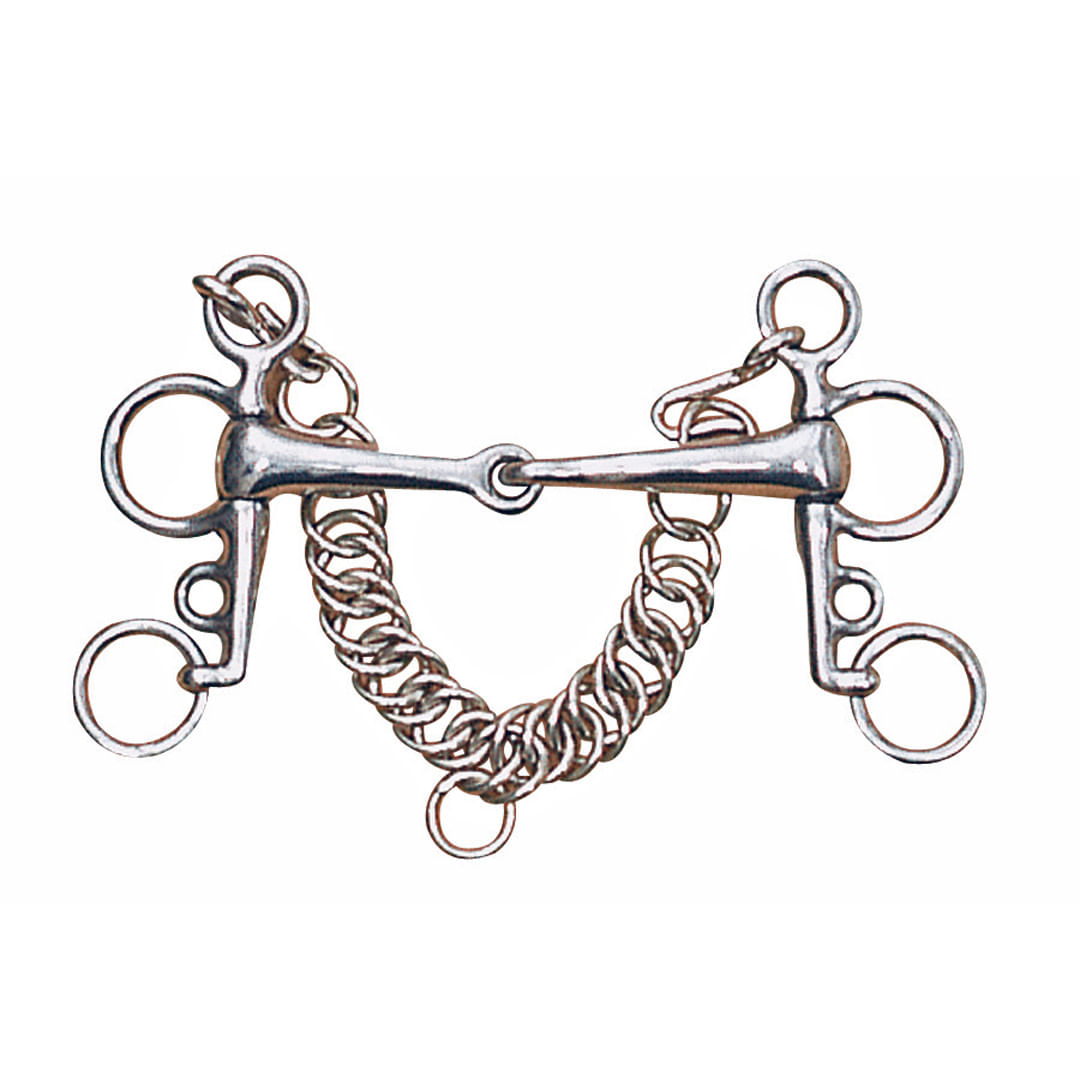
The Centaur Joint Rubber Tom Thumb Pelham is a Tom Thumb pelham with 4-inch cheeks and a rubber-covered, single-jointed mouthpiece in 18/8 stainless steel. Centaur says its Tom Thumb pelham should be ridden by experienced riders, so read the maker's description before you choose.
Shires lists the Tom Thumb Rubber Jointed Pelham Bit and a Blue Sweet Iron Brass Roller Tom Thumb Pelham. Toklat lists Tom Thumb pelhams with 3 1/4 to 3 3/4 inch cheeks in mullen, slow twist and snaffle mouths. Compare the mouthpiece first and the metal second, and check the cheek length in each listing. Look elsewhere if you want a long-cheek pelham: Nathe lists 7cm cheeks and Herm Sprenger lists up to 10cm. Shires sells its Tom Thumb pelhams across several metals, so the same short-cheek shape comes in more than one finish.
See Tom Thumb pelhams from Shires and Toklat.
Shires pelham and kimberwick bits
Rubber and sweet iron Tom Thumb pelhams
Softer mouthpieces
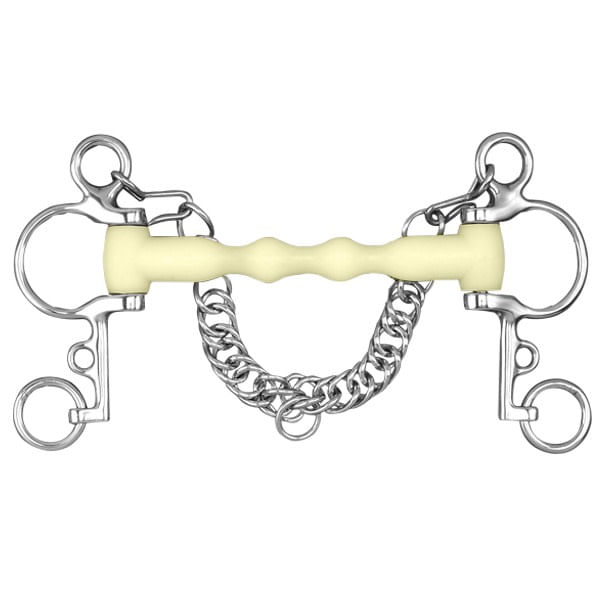
Happy Mouth Bits makes its Mullen Shaped Pelham with a polymer mullen mouthpiece and stainless steel cheeks, and its Mullen Shaped Kimberwick adds an apple-scented polymer mouth with a curb chain included. The Jointed Pelham and Jointed Kimberwick give the same polymer in a single-joint shape.
Horze lists a Rubber Mullen Mouth 101mm Pelham Bit, and Centaur lists mullen and soft rubber pelhams in stainless steel. Korsteel adds a Hard Rubber Mullen Mouth Pelham Bit and a Stainless Steel Soft Rubber Mullen Mouth Pelham Bit. Start from the mouthpiece your horse already goes well in, then add the curb. Look elsewhere if you want a metal port, since Korsteel and Toklat list low-port and medium-port pelhams in stainless steel. Mullen mouthpieces sit flat across the tongue, which is why riders who dislike a joint tend to start there.
All Happy Mouth Bits pelhams and kimberwicks are on one page.
Refined mouthpieces
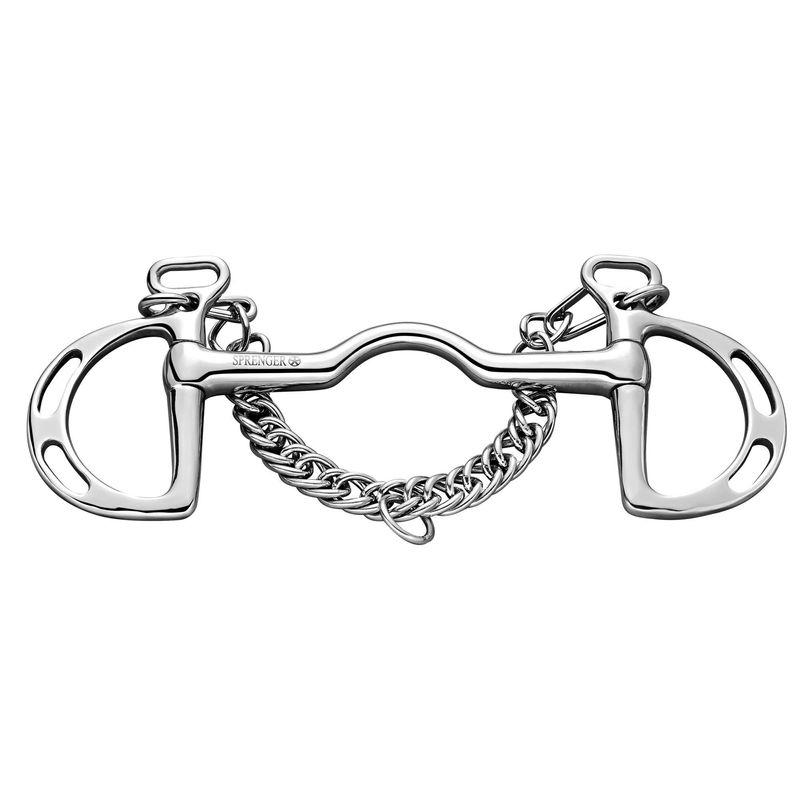
Herm Sprenger offers its Novocontact Pelham Bit 16mm Double Jointed, its Dynamic RS Pelham Bit 16mm Double Jointed and a 14mm Stainless Steel Curved Mulled Pelham. Herm Sprenger also lists Sensogan mouthpieces, and the Max-Control Pelham 16mm has a multi-joint locking mouth. Herm Sprenger describes the Novocontact as designed for horses that occasionally pull against the hand.
Nathe lists pelhams in 15mm, 18mm and 20mm, such as the Soft Port Mullen Mouth Long Cheek Pelham Bit 20mm, with a flexible mullen mouth over a steel core and bit guards. Curb chains are not included on several Nathe models, so check each listing. Korsteel also lists a Hartwell Pelham with 5 inch cheeks. Look elsewhere if you want a rubber-covered mouthpiece; Horze and Shires list those.
Browse Herm Sprenger, Nathe and Korsteel pelhams.
Herm Sprenger pelhams and kimberwicks
Herm Sprenger 14mm, 16mm and 18mm mouthpieces
One-rein control
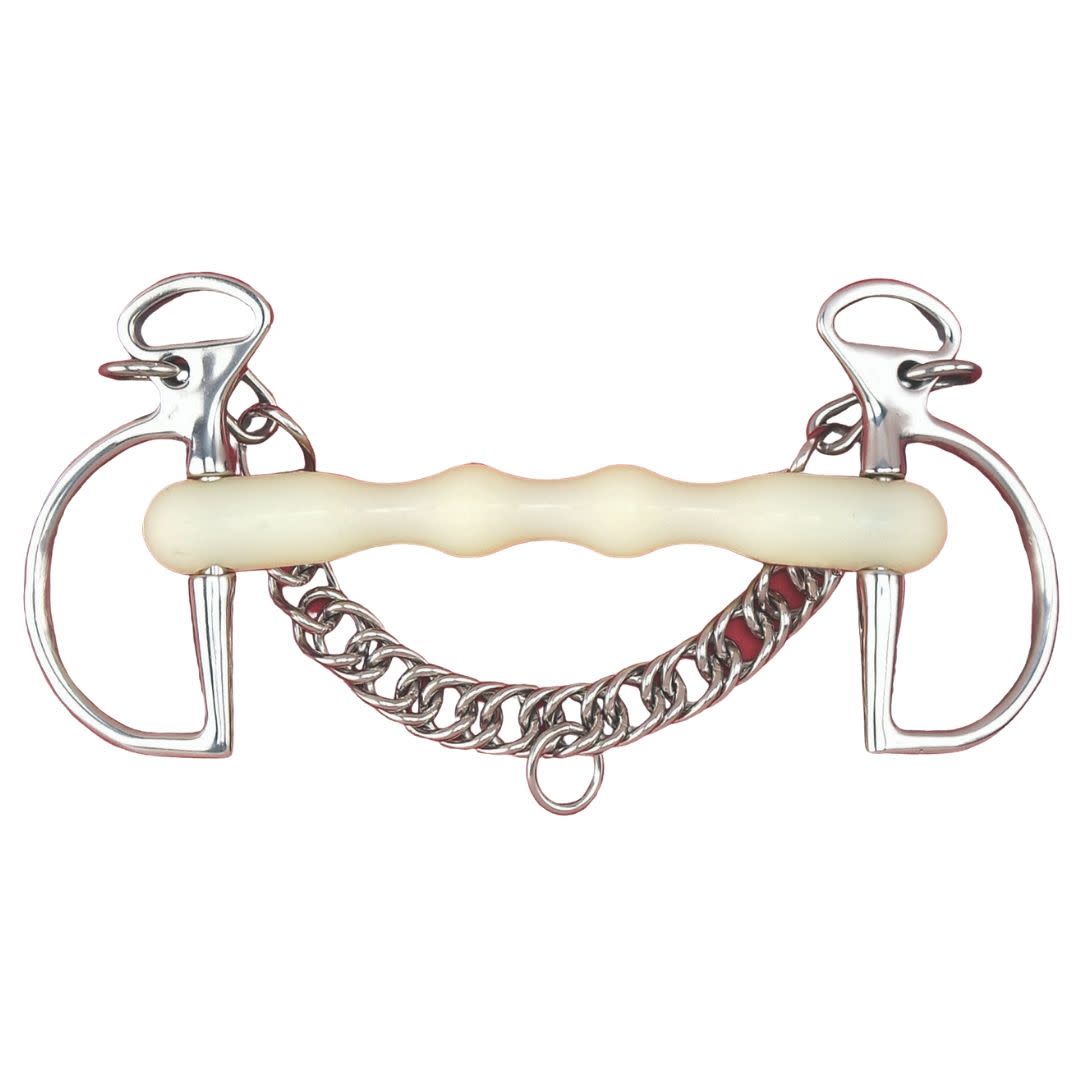
The Myler Kimberwick Medium Wide Port Comfort Snaffle MB 33 answers the one-rein question with kimberwick cheeks, a curved mouthpiece with independent side movement, and stainless steel with a copper inlay. The slots in the cheek let you choose where the rein sits.
Korsteel lists a Double Hinged Uxeter Kimberwicke with a copper roller and a Stainless Steel Cambridge Mouth Kimblewick Bit with a low port. Toklat lists Uxeter Kimberwicke cheeks with snaffle, low port and copper roller mouths. Myler lists the Copper Roller Comfort Snaffle MB 03 kimberwick as not dressage legal, so check your division's rules before you choose. Many riders search for the Kimblewick spelling; the bits are the same. Shires also lists a slotted-cheek kimberwick, so you can compare cheek length and mouthpiece across several makers.
Explore Myler and Korsteel kimberwicks.
Myler pelhams and kimberwicks
Comfort snaffle mouthpieces on kimberwick and pelham cheeks
Getting the fit
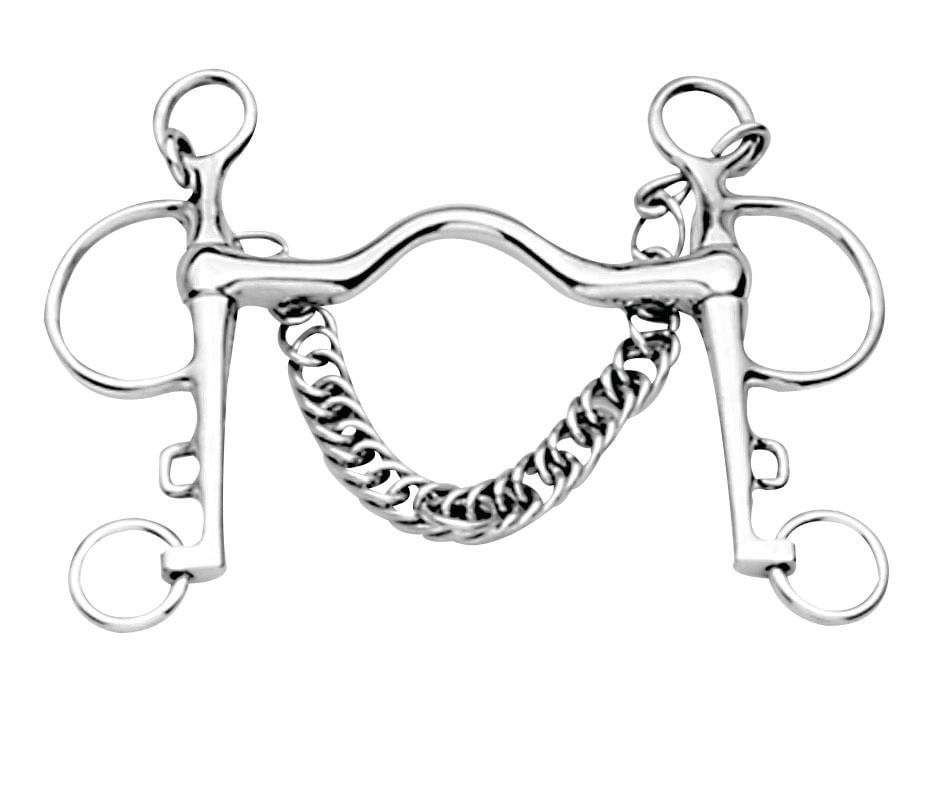
A Herm Sprenger 16mm Single Joint Pelham or a Centaur Tom Thumb fits when the mouthpiece width suits your horse's mouth, and the size chart below converts the inch and millimeter sizes the listings use. A bit that is too small pinches the lips and one that is too big slides in the mouth, so measure before you order.
Two numbers often get confused. The mm figure in a bit's name, such as 14mm, 16mm or 20mm, is the thickness of the mouthpiece, and the cheek length is a separate figure in inches or centimeters. Match your current bit's width, then compare thickness and cheek length in each listing. Look elsewhere if you need a one-size guess; a mouthpiece that suits one horse can be wrong for another.
Use the size dropdown above to filter by bit size.
Questions riders ask
A pelham is usually ridden with two reins, one on the snaffle ring and one on the curb shank, or with one rein and a bit converter. A kimberwick is ridden with one rein and uses slotted cheeks. Both use a curb chain. Check each listing for cheek length and choose by the reins you want to ride with.
A Tom Thumb is a pelham with short cheeks. Centaur lists 4-inch cheeks on its Tom Thumb pelhams, Toklat lists 3 1/4 to 3 3/4 inch cheeks, and Shires lists its own Tom Thumb styles. Centaur says its Tom Thumb should be ridden by experienced riders, so read the description before you choose.
Yes, the curb chain is part of how both bits work, but not every listing includes one. Happy Mouth kimberwicks include a chain, while several Nathe pelhams do not. Read each listing, and add a curb chain or leather curb strap from the same page if yours does not come with one.
Kimberwick is the usual spelling. Kimblewick is a common variant, and some listings use it, such as Korsteel's Cambridge Mouth Kimblewick Bit. Search either way, because both lead to the same style of bit. Browse the kimberwick sections above and compare mouthpiece options.