-20%
FAST
-20%
Amigo Ripstop 900D Plus Pony Turnout 200g - Dynasty Green/Navy/Silver
$164.95
$131.96
Save $32.99
150 to 250 g · Fall into Winter
A mediumweight turnout puts 150 to 250 grams of fill under a waterproof shell, enough to keep a full-coated horse warm and dry from the first cold rain of fall through nights in the teens, without the bulk of a heavyweight.
Updated November 2026
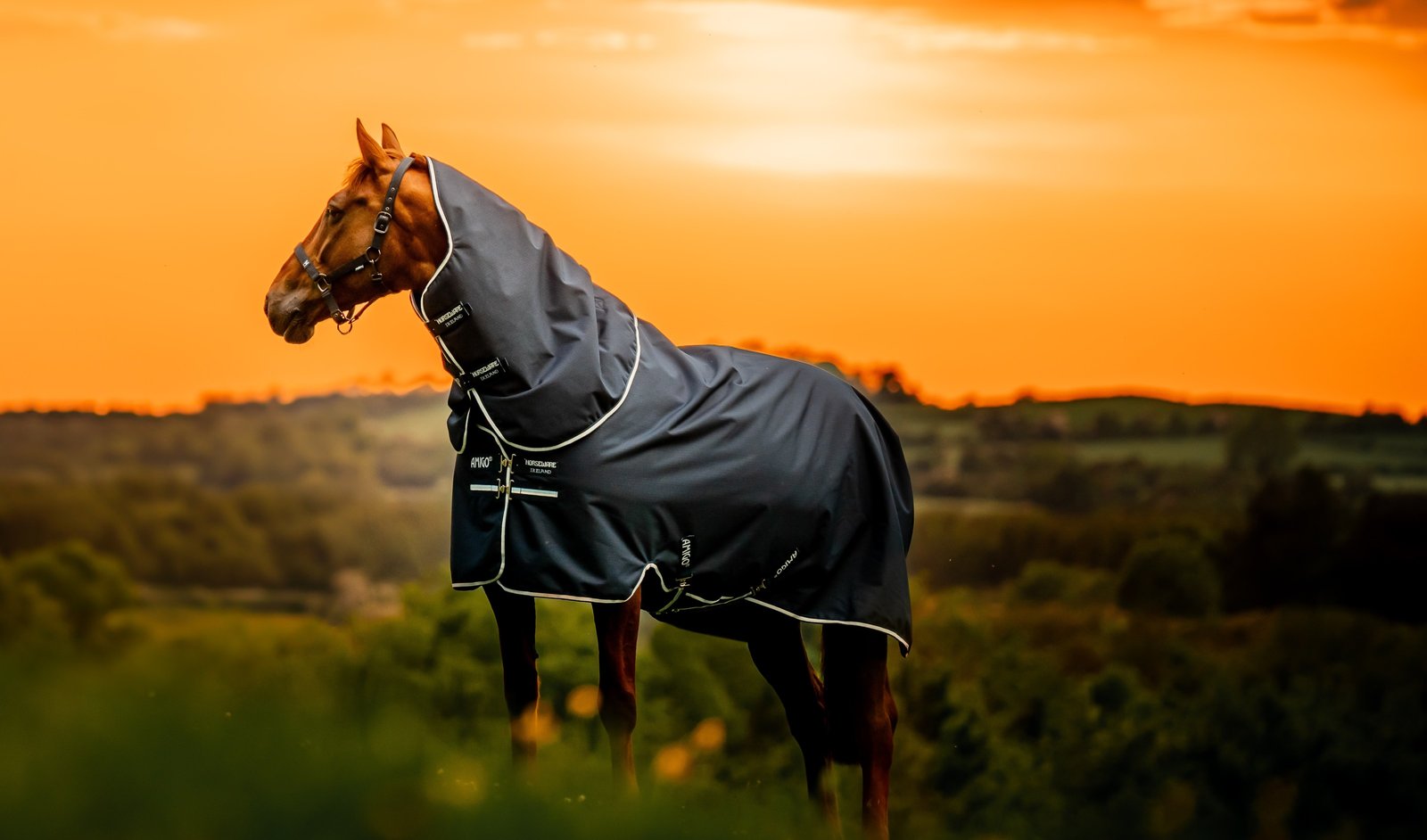
Shop mediumweight turnout blankets by brand
Find Your Fit
In the Spotlight
The mediumweights riders reach for most, every one waterproof with 150 to 250 grams of fill.
Best-selling mediumweights
Waterproof, 150 to 250 g
Riders tell us a good mediumweight fits well, stays in place and keeps a horse comfortable through months of turnout.
I have a 1200D high neck medium weight that I adore...he stays very comfortable in his WB.
I like this blankets fit on my quarter horse. It fits his wide shoulders better than my other blankets. I gave only 4 stars because I really have a hard time with the chest buckles. I don’t use the leg straps, just a tail strap. The blanket has stayed in place for the 5 days I’ve used it. I would recommend this medium weight Weatherbetta blanket.
I don't use the liners, but similar, the Amigo insulators. I love those, and have them in 100g and 200g for all my girls, and 2 have 350g ones with necks for indoor too. When I dont have the right weight, I just throw a sheet over them. They really are great blankets. I prefer to just wear one blanket on them when I can though, but having three horses it gets crazy $$$ having blankets for them all.
While they're not the best fit for him compared to Tough-1 and Amigo (the two brands that fit him best), I do keep the midweight turnout on hand as a backup blanket for when his main winter blankie soaks through
The Mediumweight Edit
The six sections below cover what the grams mean, the temperatures a mediumweight suits, when to step up to a heavyweight or add a liner, whether to choose a neck, and how tough the shell should be.
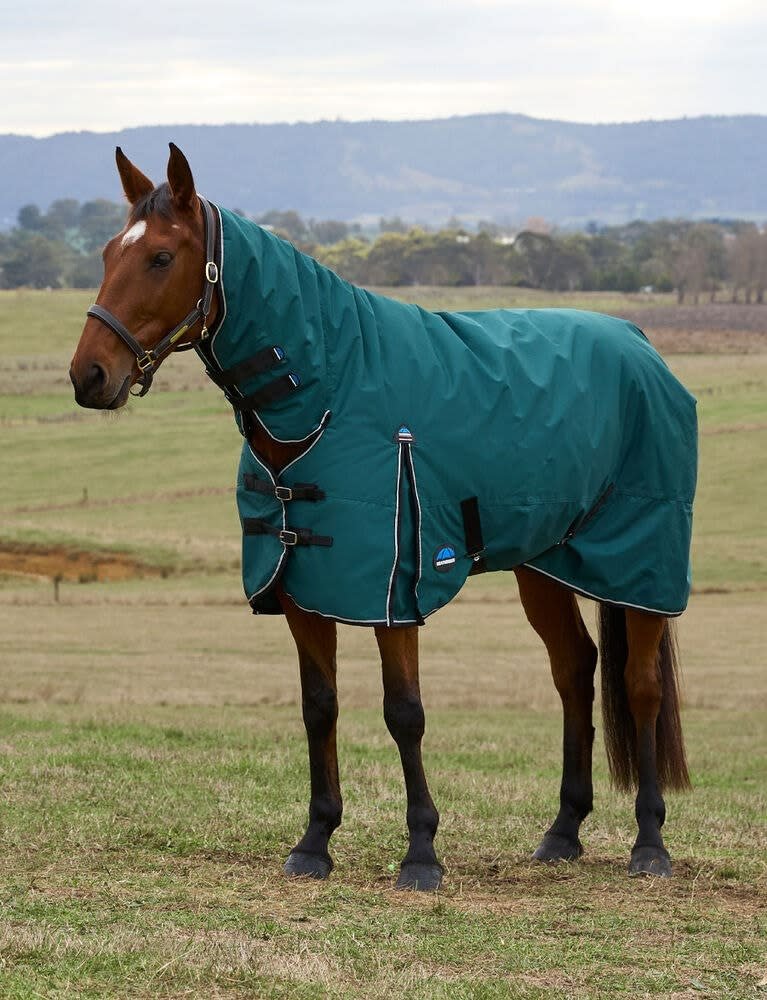
The grams
A medium weight turnout blanket carries 150 to 250 grams of fill: Horseware and Equinavia both set their medium band at 150 to 250 g, the University of Maine Extension runs it from 150 to 300 g, and Rutgers puts moderate cold at about 200 g. Most mediumweights sit at 150, 200, 220 or 250 grams, like the Amigo Ripstop 900 Plus 200g and the Weatherbeeta Comfitec Classic Turnout 220g.
Grams tell you warmth, not toughness: they measure the fill between the shell and the lining. A 250 g blanket sits at the top of the medium band and the bottom of medium-heavy, so read it as the warmest mediumweight rather than a light heavyweight. Look elsewhere if your horse is clipped and lives out through deep cold; that is heavyweight work.
| Guide | Light | Medium | Heavy |
|---|---|---|---|
| Maine Extension | 60 to 100 grams (sheets and rain sheets 0) | 150 to 300 grams | 300 grams and up |
| Horseware | 0 to 100 grams: mild cold or a thick winter coat | 150 to 250 grams: fall and early winter | 300 grams and above: severe winter |
| Rutgers | Light sheets for early fall and dry conditions | About 200 grams for moderate cold | About 300 grams for peak winter or a fully clipped horse in severe cold |
| Equinavia | 0 to 100 grams, clipped, above 50 degrees F | 150 to 250 grams from 30 to 40 degrees F; up to 300 grams from 20 to 30 | 300 to 400 grams from 10 to 20 degrees F; plus liners below 10 |
What Riders Say
Weatherbeeta Comfitec Plus Dynamic II Detach-A-Neck Medium
Love this rug, bought 220g to add liners in cooler weather, great fit for Warmblood and thoroughbred they're very cosy and comfortable with no rubbing. Only bad thing is that the leg straps do stretch hence 4*
Although this blanket is 900D it feels like it will hold up just as well as my higher quality blankets. This is the best price I've seen for a turnout with a neck piece and 200g of fill. The neck piece has been easy to take on and off. This blanket runs very true to size. Usually HW is generous on my guy but this blanket is fairly fitted. This one is definitely slimmer through the shoulders.
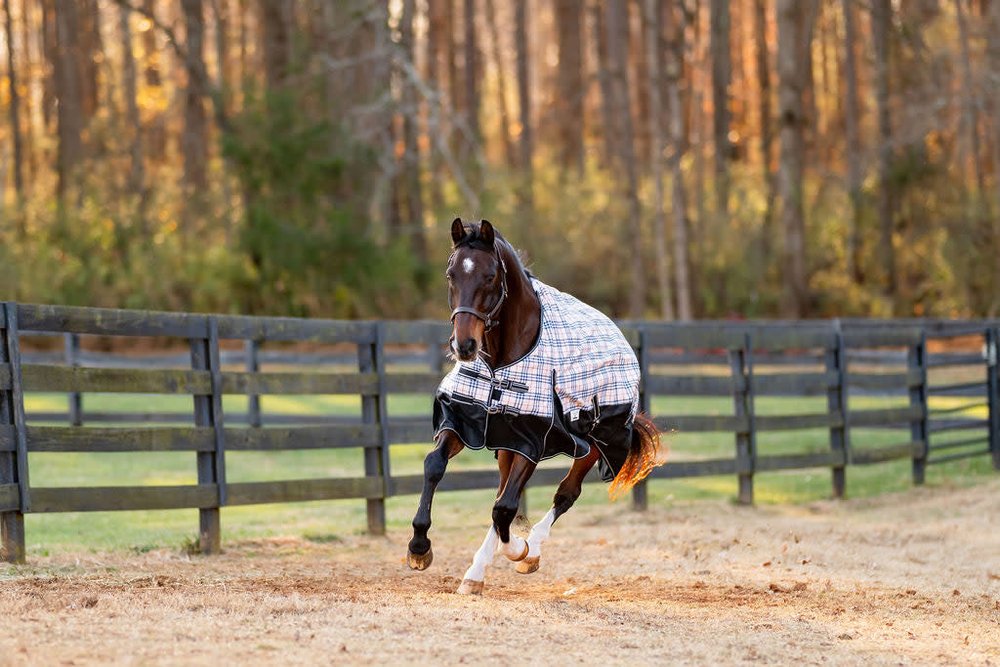
The temperature
A mediumweight is the blanket for nights of 15 to 24°F on a full-coated horse, or 25 to 39°F on a clipped one, by the University of Maine Extension blanketing chart below. Below those ranges the chart moves to a heavyweight, and above them a rain sheet or nothing does the job.
Treat the chart as a starting point. Wind and rain push the line up, and a senior or a horse moved from a warm climate feels the cold sooner. Riders with older horses tell us a good mediumweight keeps them snug and dry through weeks in the 20s and 30s, and that a well-made one lasts long enough to become the backup when they add a heavier blanket.
| Coat | Temperature | Blanket |
|---|---|---|
| Full coat | 40 degrees F and above | No blanket needed |
| Full coat | 25 to 39 degrees F | No blanket, or a rain sheet if it is wet |
| Full coat | 15 to 24 degrees F | Light or midweight blanket |
| Full coat | 0 to 14 degrees F | Heavyweight blanket |
| Full coat | Below 0 degrees F | Heavyweight blanket, liner and hood |
| Clipped | 40 to 50 degrees F | Rain sheet or lightweight blanket |
| Clipped | 25 to 39 degrees F | Light or midweight blanket |
| Clipped | 15 to 24 degrees F | Heavyweight blanket |
| Clipped | Below 15 degrees F | Heavyweight blanket, liner and hood |
What Riders Say
I had purchased another brand to replace my 37 yo Shetlands blanket before the upcoming cold snap but it had a manufacturers defect. I was refunded for that blanket and needing a size 51 medium weight turnout with a detachable neck cover is hard to find, especially in the winter. Weatherbeeta had this one in stock and not only did it fit perfectly, but is well made and cute to boot. Daisy is snug, dry, warm, and fashionable as the temperature here hovers in the 20's-30's for the next week, followed by weeks of rain.
Nice heavier blanket for my senior guy. He has a medium weight that is around 10 years old and still going strong so I opted for a heavier blanket this year.
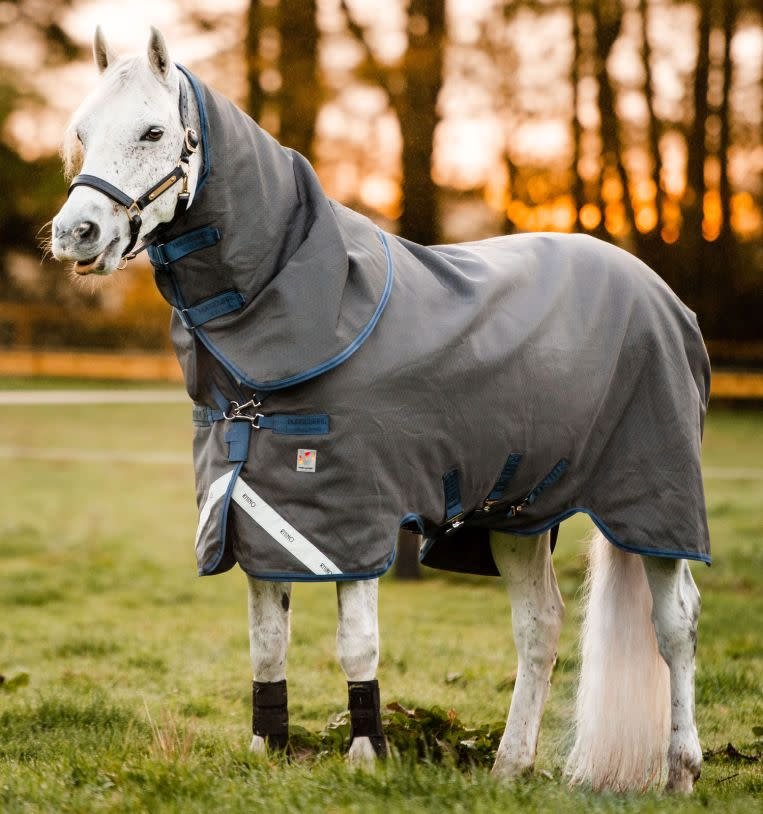
Medium or heavy
A full-coated horse in a typical winter does best in a mediumweight; a clipped horse, a senior, a hard keeper or any horse living out below about 15°F needs a heavyweight turnout blanket of 300 grams or more. The fill tiers below show where the two bands meet.
Many riders keep both. The mediumweight covers fall, early winter and the thaw, and the heavyweight comes out for the sub-zero nights. Variable-fill designs such as the Rhino Plus Medium VariLayer Turnout are built to give more warmth for less weight, so a horse stays warm without the bulk.
| Tier | Fill in grams |
|---|---|
| Sheet or rain sheet | 0 g |
| Lightweight | 1 to 120 g |
| Midweight | 121 to 270 g |
| Medium-heavyweight | 271 to 380 g |
| Heavyweight | 381 g and up |
What Riders Say
I love this blanket! Great quality, fits my Thoroughbred very well and she always seems comfortable in it. The vari-layer is an awesome feature as it keeps the horse warm without being super heavy and bulky. I purchased the medium weight, and now going into the 2nd winter it's still in great shape. Overall this is a quality blanket, and it's cute too!
Tuffrider blankets have the best fit of any brand I have tried on my horse. They dont shift to 1 side like many Ive tried. We have the medium weight already and wanted something heavier for those sub zero nights.
Add a liner
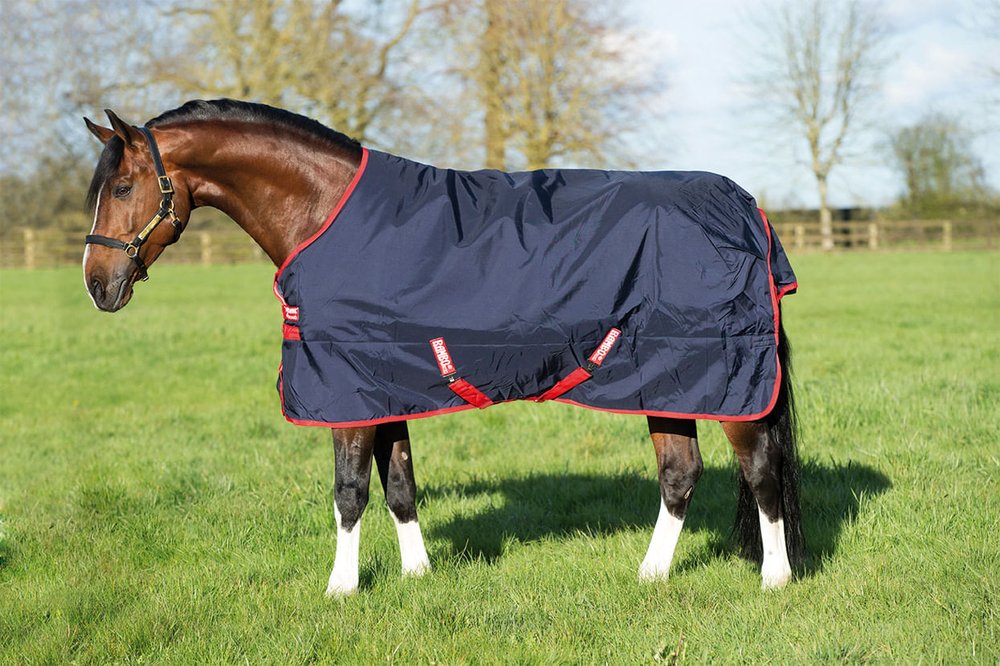
A mediumweight plus a 100 gram liner stands in for a heavyweight when deep cold comes only a few nights a winter. A 220 g turnout over a 100 g liner gives about 320 grams of fill, inside the heavyweight band, and the liner comes out again when the weather breaks.
Riders tell us a liner earns its place when a heavy blanket would sit unused most of the year, and that a liner that stays put under a turnout is the one to buy. Check that the liner attaches to your outer, at the neck and the leg straps, and size it to match the turnout. Look elsewhere if your horse lives out through weeks of hard cold: one heavyweight is simpler.
What Riders Say
I use this as a blanket liner for a medium weight blanket when the temperatures get cold in my area. It isn't worth me spending the money for a heavy blanket when we rarely need it so this works for the few occasions when the temps do drop. Excellent fit and insulation.
Their liner has a front that opens and the velcro strap is easy to open and close and does not rub her big chest or add any bulk. The liner (I got the lighter one- 100 grams) is very warm and stays in place perfectly during turnout (she rolls) and in her stall (she lays down every night). I am thrilled with my purchase and the liner will fit in my washing machine so I can wash it throughout the winter season. I got her an 81 and there's plenty of room. It fits under all her turnout sheets and mid weight blankets that are size 80. There is hardwear that clips to the outer blanket's leg straps and also places to add leg straps to the liner itself. However since it stays put I do not need to buy additional straps. The quality is excellent and the gussets have not caused rubs on her shoulders. So glad I bought it. No more struggling with an unhappy mare!
The neck
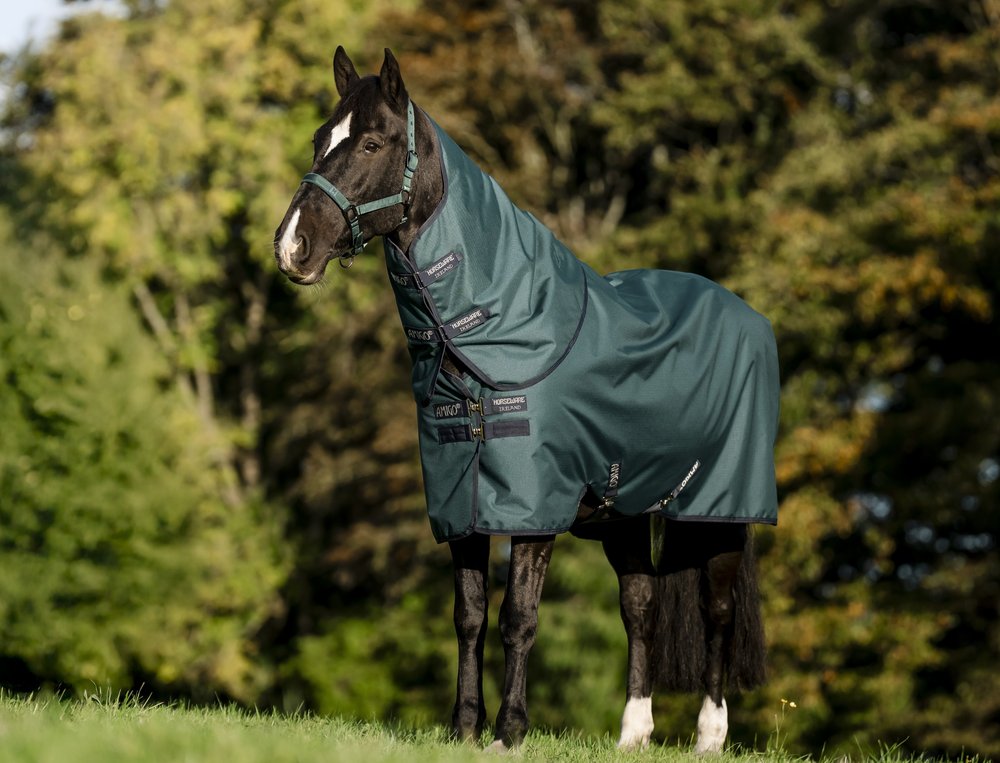
Pick a mediumweight with a neck if your horse lives out in wind and rain, and a standard cut if he has shelter or a mane that rubs. A combo neck is attached and stays put, while a detachable neck such as the one on the Weatherbeeta Comfitec Plus Dynamic Turnout Detach-A-Neck 220g comes off on milder days.
Riders tell us the best neck pieces cover up to the poll, stay in place and leave no seam to wear the mane. On a horse that is hard on blankets, look for a neck that fastens securely at the withers so it can't twist or slip.
What Riders Say
This winter blanket did not disappoint! It’s the only attached neck I have found that does not have a seam which wears out my mare mane. Neck covers all the way up the poll and stays put! It is a very durable fabric and extremely warm with the 200g fill. It runs large (not that I would size down) My 15h Quarter horse wears a 75.
I bought a medium weight with a hood and I'm loving it so far, super tough and holding up perfectly well on a horse that breaks blankets when he's bored
Mediumweights with a neck
Combo and detachable necks
The shell
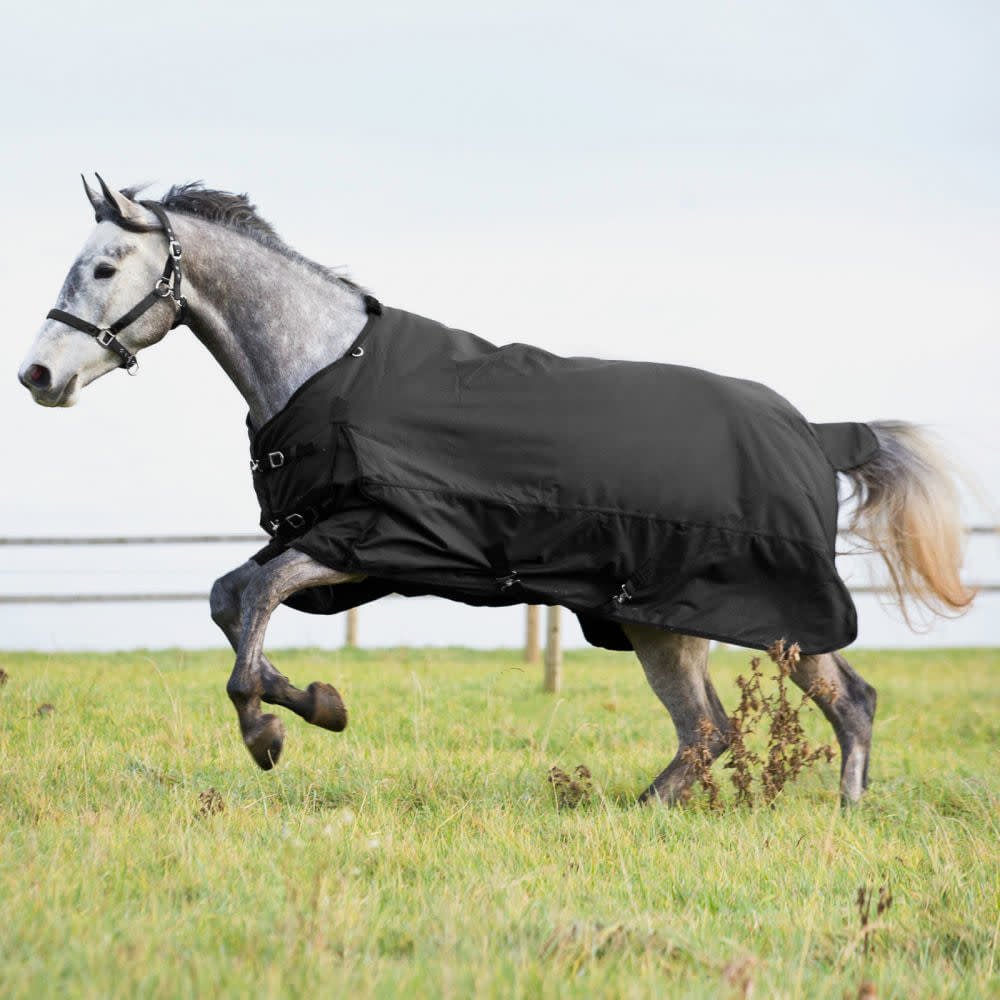
Choose a shell of about 1200 denier or more for a horse turned out in a group, and 600 to 900 denier for a quiet horse alone. Denier measures the weight of the outer fabric's yarn, and the carried lines below run from 600 to 1800, many in ripstop weaves that stop a small tear from spreading.
Riders tell us a well-made mediumweight holds up for years, even on horses that are hard on blankets. Strong hardware matters as much as denier: check the chest closures, leg straps and tail cord before the first turnout.
| Line | Shell fabric | Shell denier |
|---|---|---|
| Weatherbeeta | Ripstop polyester, polyester, ripstop, ballistic nylon | 600-1800 |
| Amigo | Polyester, ripstop polyester, ripstop, rPET fabric | 600-1200 |
| Rambo | Ballistic nylon, nylon, ripstop polyester, ripstop | 1000-1680 |
| Rhino | Polypropylene, ripstop polypropylene, ripstop polyester | 1000 |
| Equinavia | Polyester, ripstop polyester, ripstop | 600-1680 |
| Centaur | Polyester, ripstop polyester, ripstop | 600-1200 |
| Shires | Ripstop | 600-1680 |
| Bucas | Ballistic nylon, ripstop polyester, ripstop | 600-1680 |
| LeMieux | Ripstop polyester, ballistic nylon, ripstop | 600-1680 |
| TuffRider | Polyester, ripstop polyester, ripstop, nylon, ballistic nylon, triple weave herringbone | 600-1680 |
| Horze | Polyester, ripstop polyester, ripstop nylon, ripstop | 600-1200 |
| Horseware | Polyester | 1200 |
| Saxon | Ripstop | 600 |
| Back on Track | Polyester | 1680 |
What Riders Say
I have a medium weight Rhino with an extended neck and it has held up very well.
I absolutely love this blanket! It’s the perfect medium turnout, and the Aztec print is my favorite. It’s durable yet soft, and I love the straps. I haven’t bought a WeatherBeeta I’m years (hello, they last forever!) but I’m happy to see straps upgraded for a longer lasting hold for my Houdini horse that previously was known for escaping his blanket. I couldn’t bring myself to hug any other brand this time, and now more than ever I know I’ll never change. My senior citizen also gives it a five star review!
Questions riders ask
Yes. Horseware and Equinavia both band medium weight at 150 to 250 grams of fill, and Rutgers puts moderate cold at about 200 grams, so a 200 g turnout is a mediumweight.
250 grams is the top of the medium band. Horseware and Equinavia both stop medium at 250 g, and every guide we cite starts heavyweight at 300 g.
Yes. A mediumweight is built for turnout day and night, and the University of Maine Extension chart puts a full-coated horse in one when temperatures fall to 15 to 24°F. Check under the blanket the next morning: warm, dry skin means the weight is right.
Most horses do. A heavyweight is too warm for fall and early winter, when a full-coated horse is comfortable in 150 to 250 grams, so a mediumweight covers more of the season and the heavyweight waits for the coldest nights.
Temperature and fill bands: University of Maine Cooperative Extension blanketing chart; Rutgers Equine Science Center; Horseware and Equinavia blanket weight guides.