
Filters
Size:
Brand
Department:
Filter Color:
Riding Style:
Price ranges
What each certification means for your safety, and which ones your show organization requires.
Every riding helmet on a store shelf looks protective. The certification tag inside tells you what it was actually tested to do. Here's what ASTM/SEI, PAS 015, EN 1384 and Snell mean, how independent safety ratings compare helmets that all pass, and what to look for before you buy.
Updated September 2026A certification is pass or fail. It tells you a helmet cleared a set of lab tests, not how far above the line it performed.
Each standard tests different things. A helmet certified to two or three standards has been tested against more ways a fall can go wrong.
Independent ratings, like Virginia Tech's, score helmets that already pass. They help you choose between certified helmets.
The best-rated helmet can't protect you if it moves on your head. Certification and fit work together.
Riding helmets aren't federally regulated the way bike helmets are. That's why the certification tag matters: it's your proof a helmet was independently tested. These are the standards you'll see on riding helmets today, and what each one adds.
The most common tag on helmets sold here, accepted by US Equestrian, the US Pony Clubs and the FEI. It tests impact protection on a flat surface and on an edge (the "hazard anvil"), plus harness strength and stability, with helmets tested hot, cold and wet.
What it doesn't include: the spike penetration test the British and European standards use. Look for the SEI seal: SEI certifies that the model was tested at an independent lab and keeps checking production. The current version is F1163-23; F1163-15 is still widely sold and accepted.
Used across UK competition and accepted by US Equestrian and the FEI. It tests impact on flat and edge surfaces, spike penetration, crush resistance, harness strength and stability, and it's widely considered one of the tougher everyday standards.
Look for a BSI Kitemark or Inspec (IC) mark, which means batches are tested on an ongoing basis.
Published in late 2023, it replaced VG1 01.040 2014-12, which filled the gap for nearly a decade. It tests impact, penetration and crush resistance, and the 2023 version added an edge-impact (hazard anvil) test and raised the impact requirements.
VG1 helmets are still sold and accepted by US Equestrian, but new European helmets are moving to EN 1384:2023. A CE mark on its own isn't a standard; look for the standard's name on the label.
An independent American standard from the Snell Memorial Foundation. E2021 is the current version; E2016 is still accepted by the FEI. It uses higher impact drops, more anvil shapes, and tougher penetration and crush tests, and certification includes Snell's own follow-up testing of production helmets.
Very few riding helmet models carry Snell certification. See Snell's certified E2021 list.
You'll see it on helmets made for those markets. The FEI stops accepting AS/NZS 3838 on its own after 2026, so riders who compete internationally should look for one of the newer standards as well.
For everyday riding in the US, choose a helmet with the ASTM F1163/SEI tag. For extra peace of mind, look for a helmet also certified to PAS 015, EN 1384:2023 or Snell. Multiple certifications mean a helmet has been tested against more kinds of impact, not that it passed the same test twice. Every riding helmet we sell carries at least one recognized safety certification.
The label is usually under the liner or on a sticker inside the shell. Check four things before you buy, or before you trust a helmet you already own.
ASTM F1163, PAS 015, EN 1384, VG1 or Snell E2021.
Newer is better: F1163-15 or -23, not -04a or -13; Snell E2016 or E2021, not E2001.
An SEI seal, BSI Kitemark, Inspec (IC) mark or Snell sticker means production is checked, not just the first sample.
Most makers recommend replacing a helmet roughly every five years (some count from the date it was made, others from purchase), and always right after any fall where it takes a hit.
No label at all, a CE mark with no standard named, or only an old version such as ASTM F1163-04a or Snell E2001. The FEI no longer accepts those older versions.
Helmet foam compresses on impact and doesn't spring back. See when to replace your helmet in our Helmet Guide.
Certification tells you a helmet passed. A safety rating tells you how well it did compared with other helmets that also passed.
The Virginia Tech Helmet Lab publishes independent equestrian helmet ratings on a scale of 0 to 5 stars. The lab runs 16 impacts on each helmet, including low falls, higher falls and fast, angled impacts like the ones in a cross-country fall, and measures both straight-line and rotational (twisting) forces on the head. Each helmet gets a STAR score: the lower the score, the lower the estimated concussion risk, and the more stars.
Every helmet Virginia Tech rates has already passed at least one certification, so a lower rating doesn't mean a helmet is unsafe. Use the ratings to compare certified helmets that fit you well. See Virginia Tech's equestrian helmet ratings.
Rotational forces from angled impacts are one of the things the Virginia Tech ratings measure. Systems such as Mips are designed to reduce them by letting the helmet shell move slightly around the head on impact. Mips is a feature, not a certification, so a Mips helmet still needs a certification tag. Shop Mips helmets.
| ★★★★★ | Lowest estimated concussion risk |
| ★★★★☆ | Better than most |
| ★★★☆☆ | Middle of the field |
| ★★☆☆☆ | Below average |
| ★☆☆☆☆ | Higher estimated risk |
Every rated helmet has already passed at least one certification. Stars compare helmets; they don't replace the tag.
Your helmet has to carry a standard your show organization accepts, with its testing tag or label in place. Here's what the main organizations accept today.
| Organization | What's accepted |
|---|---|
| US Equestrian (USEF) | ASTM F1163 with SEI, PAS 015:2011, VG1 01.040 2014-12, or Snell 2016. The helmet must carry its testing tag or label. |
| US Pony Clubs (USPC) | ASTM F1163-15 or -23 with SEI, Snell E2021, PAS 015 with BSI Kitemark, VG1 or EN 1384 with Kitemark or IC mark, or AS/NZS 3838 with SAI Global mark. |
| FEI (international), 2026 | PAS 015, Snell E2021/E2016, EN 1384:2023, ASTM F1163-23, ASTM F1163-15, VG1/EN 1384:2017 or AS/NZS 3838. |
| FEI, 2027 | ASTM F1163-15 and VG1 count only alongside PAS 015, Snell, EN 1384:2023 or ASTM F1163-23. AS/NZS 3838 is no longer accepted. |
| FEI, from January 1, 2028 | At least two accepted standards, with a quality testing mark for at least one. |
Always check your organization's current rulebook before you show. See the FEI accepted testing standards.
Champion helmets hold the top five spots in Virginia Tech's equestrian helmet ratings, and the Champion Revolve X-Air Mips Peaked is the only helmet on the list with 5 stars. Champion is no longer distributed in the US, so we can't restock these once they're gone. What we have is on closeout now. Every Champion helmet here is triple certified to ASTM F1163-15, PAS 015 and VG1, and most have a replaceable liner.
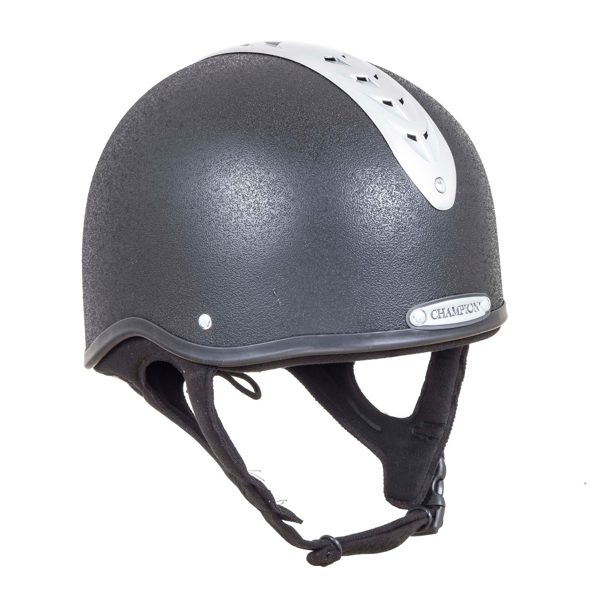
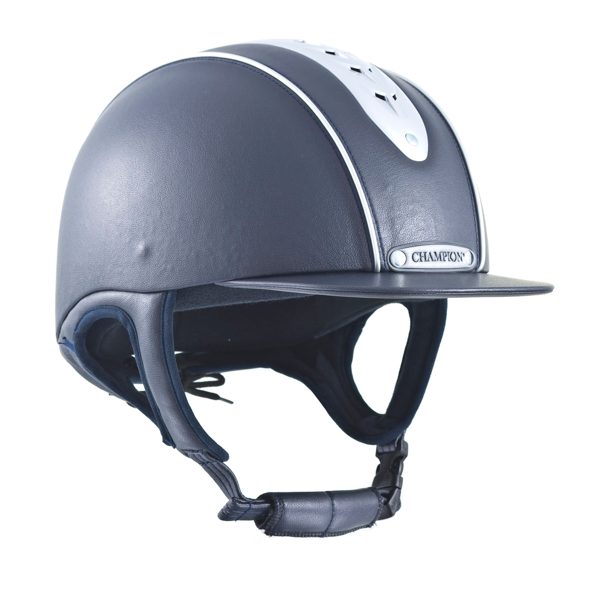
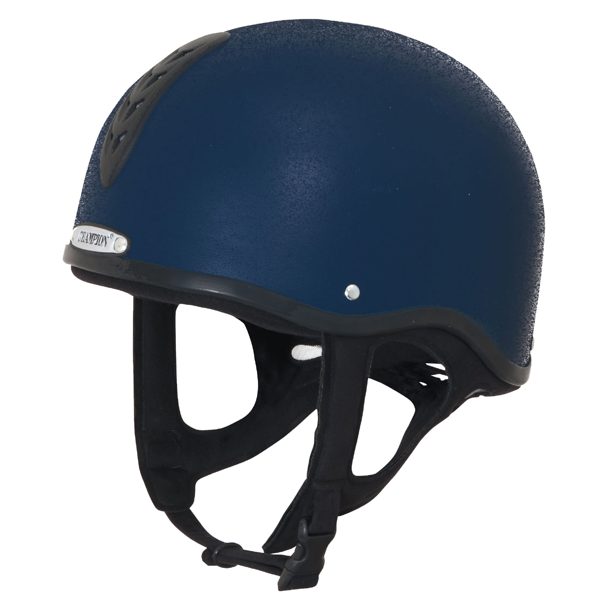
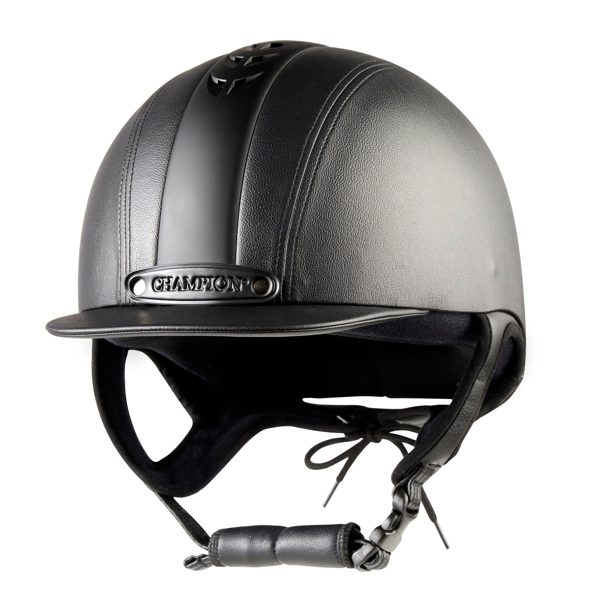
Already own a Champion? Replacement liners for Revolve, Ventair and Air-Tech helmets are in the closeout too. Shop replacement liners · Shop the full Champion closeout →
An ASTM F1163/SEI tag at minimum; PAS 015, EN 1384:2023 or Snell on top if you want more testing.
A recent version year, and a helmet within about five years of its replacement clock.
If two certified helmets fit, compare their Virginia Tech ratings.
Level on your head, about an inch above your eyebrows, and snug before you fasten the harness. Get the fit right.
No single tag tells the whole story. Snell has the most demanding tests, PAS 015 and EN 1384:2023 add penetration and crush tests that ASTM doesn't, and ASTM F1163/SEI is the US minimum. A helmet certified to more than one standard has been tested more ways.
ASTM F1163 is the standard. SEI is the organization that certifies a helmet meets it and keeps checking production. In the US, look for the SEI seal.
A CE mark alone doesn't tell you which test the helmet passed. Look for the standard itself, such as EN 1384:2023 or VG1, on the label.
No. Virginia Tech only rates helmets that are already certified. Its star ratings help you compare certified helmets.
From January 1, 2028, the FEI requires at least two accepted standards (PAS 015, Snell, EN 1384:2023 or ASTM F1163-23), and helmets certified only to ASTM F1163-15 or VG1 no longer qualify. US Equestrian national rules are separate; check your rulebook.
Right away after any fall where it takes a hit, and otherwise roughly every five years. Some makers count from the date it was made, others from purchase, so check your helmet's instructions.
Find certified helmets from One K, Troxel, Ovation, IRH, Trauma Void, TuffRider, LeMieux, Equinavia and Champion, all at Tack of the Day for less. Compare styles in our Helmet Center.