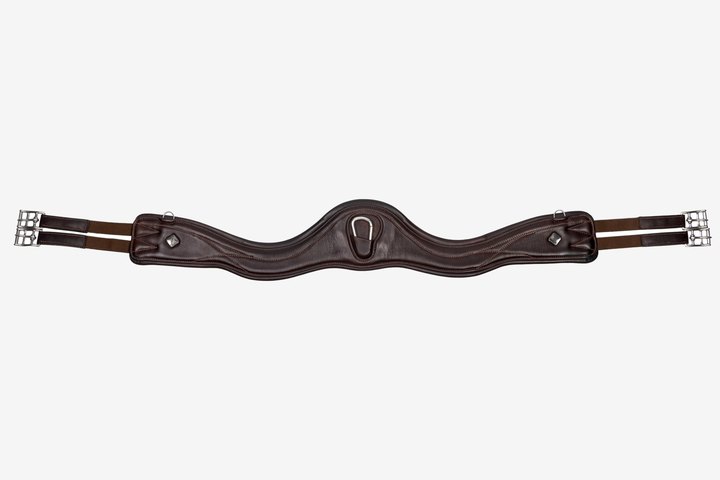
LeMieux Integrated Dressage Girth - Black/Black
$119.95
LeMieux · Girths and Cinches
LeMieux girths for English riders: Gel-Tek anatomic and Arika contoured girths for jumping and stud work, leather and integrated girths for dressage, hunter girths, and Merino+ or Simuwool covers and sleeves.
Riders tell us what they notice about LeMieux girths.
LeMieux Fleece Lined Anatomic Girth - Black
My sensitive skinmed horse no longer has girth galls thanks to this girth. The girth does run about an inch small, so it was initially hard to get it on. The 56” was the largest available size, so I am glad it will go on.
My one-eyed ex-racehorse who underwent 5 kissing spine vertebrae surgeries is very talkative and picky about his gear. He (Dannie) loves this girth. I (his human) needed an affordable yet comfortable option that would look nice at a show as I’m a professional. This passed the test! My students think it’s cool, too.
Two lines worth a closer look: Gel-Tek anatomic and Arika contoured
Gel-Tek anatomic girths
Gel-impregnated, anatomically shaped girths for jumping, schooling and stud work
Arika contoured girths
Soft leather contoured girths in long, short and stud versions
Choose by discipline first and by your horse’s skin second. LeMieux makes Gel-Tek anatomic and Arika contoured girths for jumping, stud work and everyday schooling, leather and integrated girths for dressage, and a hunter girth with a detachable liner. Once you know the line, the length and size follow your saddle and your horse.
Gel-Tek girths are anatomically shaped in soft oiled leather, with gel-impregnated pockets on the leading edge. Arika girths use soft, supple leather with double elastic on both sides, and the stud versions add a leather pad at the strike point. The fleece-lined anatomic girth is a synthetic option with a soft fleece lining, made with sensitive horses in mind. Hunter girths come in pre-oiled American leather with a matte finish and a detachable Merino+ or non-slip liner.
Every LeMieux product is on the LeMieux page, and more makes are on the horse girths and cinches page.
Our Take: leather girths
Leather dressage and long girths, some with a detachable Simuwool liner
LeMieux girths are for English riders who want a shaped, soft girth: jumpers, eventers, dressage riders, hunter riders and anyone whose horse rubs easily.
Look elsewhere if you need a girth for a western saddle; this range is for English saddles.
Girth length follows your saddle. A dressage saddle has long billets and takes a short girth, so the dressage options are short: the leather dressage girth, the leather dressage girth with a detachable Simuwool liner, the integrated dressage girth and the Gel-Tek anatomic dressage girth. The integrated girth is made for dressage saddles and for mono-flap saddles, with synthetic webbing, a faux fur lining and a center dee ring.
A jumping or all-purpose saddle has short billets and takes a long girth, such as the Gel-Tek anatomic jumping girth, the Arika contoured long girth or the leather long girth with Simuwool. Because the length follows the saddle, a short dressage girth does not turn into a jumping girth; pick the girth that matches the saddle you ride in. Stud versions come in long and short lengths for riders who stud up.
Dressage girths, covers and sleeves
Short girths and liners for dressage saddles
An anatomic girth is shaped to leave room behind the elbows rather than pressing straight across them. In the LeMieux range that means the Gel-Tek anatomic girths, with gel-impregnated pockets on the leading edge, the Arika contoured girths, and the fleece-lined anatomic girth for sensitive horses.
A horse with a forward girth groove can still pull a saddle forward, so an anatomic girth is one part of the answer. Have a saddle fitter check how the saddle sits as well as the girth, and use the size links above to see every length in your range.
Sizes depend on the style. Short girths for dressage saddles and short stud styles run from 18 to 32 inches in 2-inch steps. Long girths run from 40 to 57 inches. Covers and sleeves come in small, medium, large and extra large, and some styles are one size.
Fit the girth so the buckles sit around the middle of the billet holes on both sides, with room left to tighten after you warm up. Each product page carries its own size chart image, so check it for the style you choose. One rider notes the fleece-lined girth runs about an inch small, so compare with the girth you use now before you order.
| Girth type | Sizes | Fits |
|---|---|---|
| Short dressage and short stud girths | 18 to 32 in | Dressage saddles with long billets |
| Long girths | 40 to 57 in | Jumping and all-purpose saddles with short billets |
| Covers and sleeves | S, M, L, XL or One Size | The girth each cover is made for |
A cover or sleeve adds a soft, washable layer to a girth. Merino+ covers are 70 percent Merino wool and 30 percent acrylic, each made for a specific Gel-Tek girth, trimmed to fit and held with touchtape fasteners. Machine wash them and air dry flat. Simuwool covers and sleeves are faux lambswool that washes and dries quickly.
Match the cover to the girth by name and length, then pick your size: a short stud girth takes a short stud cover, a jumping girth a jumping cover.
Girth covers and sleeves
Merino+ and Simuwool covers sized to specific girths
LeMieux suits English riders who jump, event, ride dressage or hunt and want a shaped, soft girth, especially for a horse that rubs easily. The range runs from Gel-Tek anatomic and Arika contoured girths to leather dressage and hunter girths, plus covers and sleeves.
CloseMatch the girth to your saddle. A dressage saddle has long billets and takes a short girth; a jumping or all-purpose saddle has short billets and takes a long girth. A short dressage girth is not a jumping girth, so choose the length your saddle needs. The integrated dressage girth suits dressage and mono-flap saddles.
CloseAn anatomic girth is worth trying if your horse rubs, pinches or is sensitive behind the elbow, because it is shaped to leave room there. A forward girth groove can still pull a saddle forward, so ask a saddle fitter to check the saddle as well as the girth.
CloseStart with the girth you use now, or measure from billet buckle to billet buckle under the belly, and pick the nearest size on the product’s size chart. The buckles should sit around the middle of the holes on both sides. Tighten gradually until the saddle stays put, then check again after you warm up.
CloseWipe it with lukewarm water and saddle soap, let it air dry, then condition it with leather balm or oil. Leaving leather dirty, damp or drying it too quickly can cause stiffening and cracks.
CloseQuoted word for word from public rider discussions and checked against the original posts, October 2026.